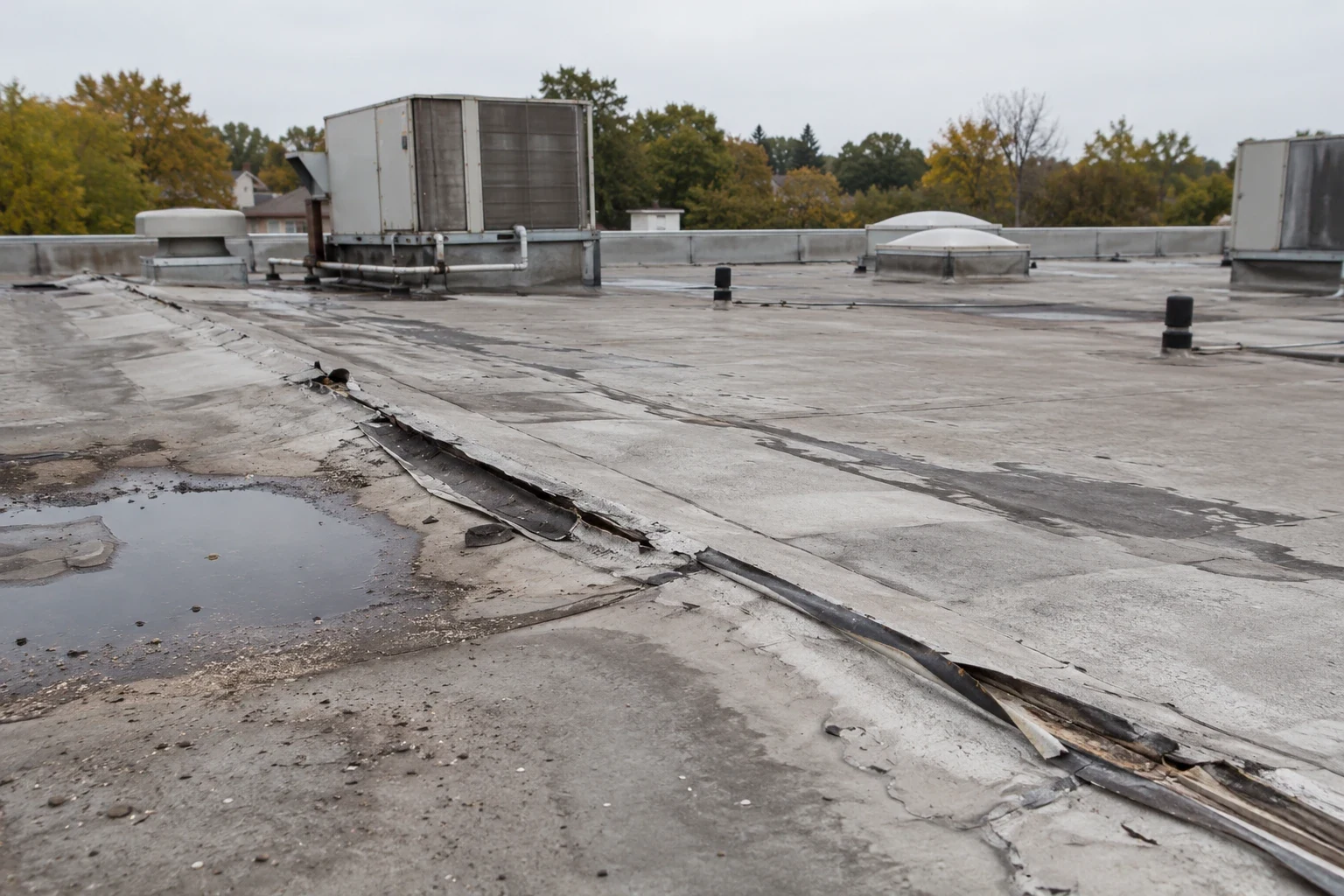
A puddle that remains after surrounding roof areas dry deserves a measured check, not an automatic coating. On a Springfield commercial roof, the first questions are how deep the water is, how long it remains, and whether the area changes after freeze and thaw. Heavy snow and ice can stress roofing and supporting structure during Massachusetts winter storms, so we inspect both drainage and insulation condition. We mark the low area, compare it with nearby drains and deck transitions, and check for membrane stress before choosing a repair. A property in Springfield’s Medical District may have occupied clinical routes below the roof; a building along the State Street corridor may have different delivery constraints. The repair should address the roof assembly while the facility keeps its safe routes open.
Measure the standing water
We start after the roof has had time to drain, then record the approximate footprint and depth rather than relying on a single photograph. The path from the puddle to each outlet is checked for debris, blocked strainers, damaged bowls, crushed insulation, and membrane ridges that redirect flow. We inspect nearby seams, patches, curbs, and wall transitions for movement or moisture. A low area may reflect the deck profile, insulation compression, a prior repair, or a drainage restriction. Those causes call for different work, so the Diligence Notes keep them separate.
The building below can help narrow the investigation. A ceiling mark, musty odor, or change after a thaw may point to water reaching insulation or an interior joint. We compare that report with the roof plan and test the likely path. A drain and scupper review checks outlet function, while moisture mapping can help select test locations. Neither tool substitutes for opening the assembly when the condition remains uncertain. We state what is visible and what a test would resolve.
Separate the cause from the symptom
A blocked drain can be corrected without rebuilding a roof section, but a depressed surface over wet insulation may need a larger repair. We inspect the surrounding membrane for blisters, wrinkles, open seams, soft areas, and punctures. At a drain bowl, the membrane must terminate securely and direct water into the outlet. At a parapet or curb, the edge detail should not create a dam. If the water line reaches a seam or patch, we check adhesion and substrate condition before deciding whether to reseal, cut out, or replace material.
Freeze-thaw cycles add another check. Severe winter storms are a high-likelihood hazard in Massachusetts. Ice can temporarily block a drain, while repeated wetting can expose weak laps and brittle transitions. We do not assume a winter puddle means the deck is damaged; a test cut or other inspection establishes what sits below. Where damage is limited, a flashing repair or seam repair may restore the water path. If the assembly is wet across a wider area, the repair limits must include the affected insulation.
Choose a repair that drains
When the outlet is obstructed, we clear the immediate drain path and check the bowl, strainer, and surrounding membrane. A damaged drain connection or loose flashing requires a repair that returns water to the intended outlet. If insulation has compressed, we remove unstable material to sound limits and restore the slope and membrane tie-in where the assembly allows. A shallow correction that leaves the outlet higher than the surrounding surface will not solve the collection point.
For broader low areas, we evaluate whether tapered insulation or another drainage correction fits the existing roof. The deck, system type, attachment, and parapet heights affect that choice. A focused repair may restore one area; repeated ponding and wet insulation can make a replacement comparison more practical. We identify the cost and timing drivers separately, including removal, disposal, interior protection, and material lead time. A coating is considered only when the substrate and drainage are suitable, not as a way to conceal a low spot.
Protect the occupied space
Repair work needs a defined path from roof access to the affected section. We confirm hatch or ladder condition, fall protection, tenant schedule, and the route for removing wet material. If the building remains active, we coordinate protection below before opening the membrane. A temporary tie-in is secured at the end of the work window and photographed so the next crew knows what remains exposed. The facilities contact receives the section boundary and any access condition that could change the sequence.
Metro Center is Springfield’s central business and government area on the city’s western edge. For an occupied property there, the repair map ties protected rooms and roof access to the building section being opened. We coordinate the work zone with the site contact and keep occupant, staff, and delivery routes outside the material path. State Street runs east-west between East Columbus Avenue and Berkshire Avenue, carrying business and institutional frontage. Along that corridor, we verify lift placement and supply delivery with the site contact. Occupied-building sequencing can limit disruption while keeping the repair inspection accessible.
Set the boundary and record it
The repair scope names the measured low area, outlet condition, wet or dry material, and any test result. Photographs show the original water line, the assembly when opened, and the completed drainage detail. We note whether the correction addresses debris, insulation, membrane, or more than one condition. That record gives the owner a way to compare future observations against the current roof, rather than treating every puddle as a new event.
Price and timing depend on roof height, access, removal depth, interior protection, and whether the deck needs additional review. A repair that can be completed in one section may fit a short weather window; work that reaches several layers may need more planning. We identify what is confirmed and what may change after opening. A roof condition report can organize findings for a larger capital decision, and can phase multiple roof areas. The goal is a drain path the owner can inspect and a scope that matches the assembly.
Check the next weather window
After the repair, we verify that water reaches the outlet, inspect the surrounding tie-in, and clear loose debris from the work area. The closeout records the date, roof section, materials, and photographs. If the deck or insulation remains under observation, we identify the next check and the condition that would trigger it. A follow-up after a major rain or thaw can confirm that the corrected section behaves as expected.
Do not wait on a growing interior leak simply because the puddle looks shallow from the roof. Water can move beneath the surface before it reaches a ceiling. If the roof cannot be accessed safely, isolate the interior area and share the leak timing and access constraints. We can plan the inspection around a safe weather window and determine whether temporary protection is needed. Each next step should follow what the roof reveals.
Commercial Roofing Questions
How long can water remain before it is a concern?
We record how long it stays after nearby areas drain and whether the footprint changes. Duration, depth, and membrane condition together determine whether the area needs correction.
Can a drain cleaning solve the problem?
A blocked outlet may be the cause, but we also check the bowl, membrane termination, insulation, and deck profile. The repair is complete only when the water path is clear and the surrounding detail is sound.
Will a coating remove a ponding area?
A coating follows the surface and does not correct a low slope. We first identify the cause and check whether the substrate and drainage can support a restoration system.
Could standing water mean the insulation is wet?
It can. Surface water alone cannot show the condition below, so the roof history and field checks decide whether a test cut or moisture survey is needed.
What should the repair record show?
It should locate the low area, describe the outlet and substrate condition, show the completed tie-in, and list any follow-up check that remains open.