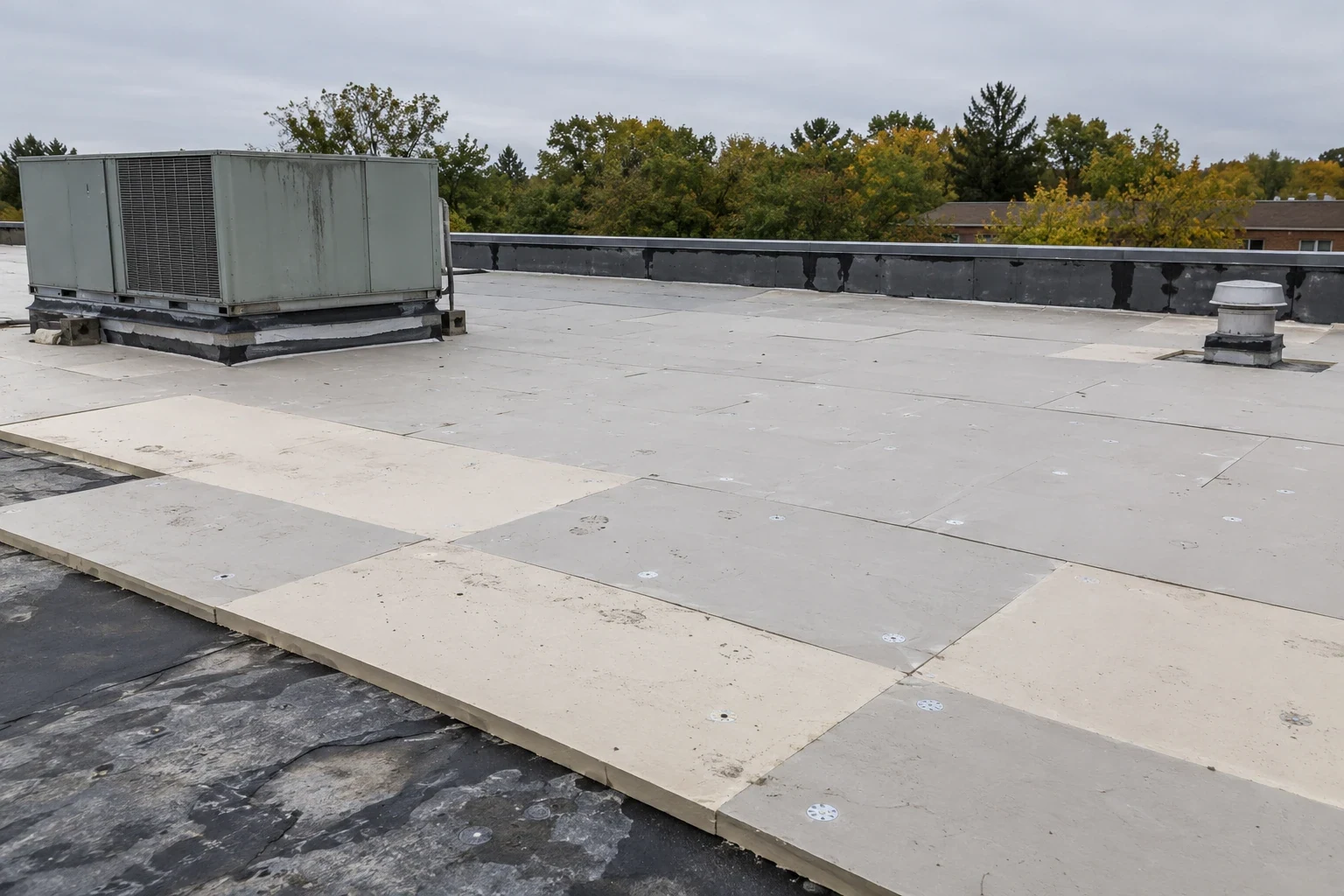
Water entering an occupied building needs a controlled response before the permanent scope is known. We provide emergency commercial roof response at any hour, including weekends and holidays, and begin by confirming the affected area, safe access, and active water path. A damaged roof section may need interior protection, temporary cover, or a limited dry-in before repair materials can be installed. Springfield has documented history of severe wind damage, including the 2011 tornado path that crossed the city. That history makes perimeter and edge checks relevant after a wind event, while the actual roof condition determines the work. Sites near Court Square or East Springfield may have different staging and operating constraints.
Confirm safe access
The first call establishes whether the roof can be reached, where water is entering, and what is at risk below. We ask for the building address, roof access instructions, affected rooms, water volume, electrical or equipment concerns, and a site contact. If access is unsafe or wind remains active, work waits until conditions permit entry. The facility team can isolate power or protect contents while the roofing crew prepares equipment. A clear access plan avoids moving through occupied areas without coordination.
For a medical building in the Springfield Medical District, the route to the roof and the room below it can matter as much as the leak location. The 2011 district inventory described a substantial health-services workforce and group of establishments. We coordinate with the facility contact on entrances, air intakes, sensitive rooms, and deliveries. A commercial leak investigation follows once immediate exposure is controlled, and photos record the conditions before temporary materials conceal them.
Protect the interior
Emergency work begins with limiting further entry. Depending on the roof, that can mean covering an opening, sealing a failed transition temporarily, diverting water to an outlet, or removing loose debris that threatens the membrane. Inside, the site contact protects equipment and isolates an affected space when needed. We do not treat a tarp or temporary seal as a completed repair. The closeout lists where it was placed, what it covers, and what must be inspected when conditions allow permanent work.
Snow and ice are part of Massachusetts’ severe-winter exposure, and the state resilience plan identifies roof and structure damage from their weight. During a winter response, ice at edges or drains can restrict safe movement and affect the route water takes. We avoid adding loads or blocking overflow paths with temporary materials. When the crew cannot safely reach a detail, we explain the access limit and identify the earliest safe return window. The owner then has a specific protection plan instead of an open-ended promise.
Inside the building, we help the contact separate roof response from cleanup and equipment decisions. A ceiling opening may need a container or protected exclusion area while water is active. If the leak is near power, medical equipment, production lines, or stored goods, the facility team decides which systems to isolate or move. We coordinate with that contact and keep the roof crew focused on the membrane and temporary closure. A simple location list, room photos, and a time log help the owner match the interior impact with the roof repair record once the event has passed.
Map the affected section
After the building is stable, we inspect the roof area around the opening. The review covers membrane punctures, seam separation, uplifted edges, damaged flashing, displaced coping, blocked drains, and impact from falling material. We mark the visible damage and note adjoining areas that may need a closer look. If several sections were affected, each is recorded separately so the permanent proposal does not combine different conditions into one vague line item.
The National Weather Service recorded roof removals and damage to large commercial brick structures during the June 2011 Springfield tornado. That record is why we check attachment and edge conditions after a reported wind event, then separate emergency protection from full restoration. A wind-damage assessment can document the repair boundary and any broader perimeter concern.
Choose a temporary close
A temporary closure has to suit the roof, forecast, and expected time before permanent work. We secure cover at sound material, keep it from creating a new wind hazard, and protect drain paths. On a low-slope roof, a patch or cover needs a stable substrate and a route for any water that remains. A pitched metal area needs a different method than a membrane roof. We photograph its edges and adjacent details so the follow-up crew knows what was installed and where removal begins.
At a mixed-use building on the State Street corridor, lift access, storefront hours, and pedestrian routes may affect the work zone. Springfield’s Building Division enforces building code and permit conditions and reviews applicable construction and repair work. For an emergency closure, we identify whether follow-up work will require an approval or inspection and coordinate the scope accordingly. Temporary protection, interior cleanup, and permanent repairs remain separate tasks in the work record.
Plan permanent work
The permanent repair follows only after the crew has confirmed the affected assembly and suitable installation conditions. We specify material compatibility, removal limits, insulation or deck work, flashing, edge treatment, and the method for sealing the repair. If damage extends across a roof section or the existing membrane has recurring failures, we compare localized work with a permanent roof replacement. The owner receives photographs and a scope that shows what is confirmed and what remains concealed.
Where there is standing water or repeated blockage, a drain and scupper correction may need to accompany the membrane repair. For moisture beyond the visible leak, an infrared moisture survey can help prioritize test cuts. We record completion, remaining items, and the next inspection trigger, such as a storm, recurring leak, or return of mechanical trades. That record keeps the emergency response connected to the permanent roof plan.
The temporary closure also needs a recheck after wind or rain. We inspect its attachment, confirm that water is still moving toward a drain, and remove loose debris that could obstruct a path. If the owner cannot reach the roof, we provide a dated photo set and explain which edge or fastener needs attention. The repair proposal then distinguishes material that has been confirmed damaged from areas that need a follow-up inspection. That allows approval to proceed on the known work without treating concealed conditions as settled. The follow-up call confirms that the temporary closure held through the next weather event, and the answer goes into the same record.
Commercial Roofing Questions
Can the crew respond overnight or on a holiday?
Emergency response is available at any hour, including weekends and holidays. We confirm the roof access route and site contact before dispatching a crew.
What should we do while the crew is traveling?
Protect contents, isolate affected equipment when safe, and keep people away from the leak area. Share roof access instructions and photographs with the site contact.
Is a tarp considered the permanent repair?
No. Temporary protection controls exposure until the assembly and installation conditions can be checked. We document the cover and prepare the follow-up scope.
Can you work during active wind or lightning?
Crew safety sets the access decision. If roof conditions prevent safe work, we coordinate interior protection and return when the roof can be reached safely.
What information will we receive after the call?
The record identifies the affected area, temporary work, photographs, remaining conditions, and the next inspection or repair step.