A warm or cool patch on a roof is a clue, not a diagnosis. We use infrared imaging to map temperature differences that may point to moisture beneath a commercial membrane, then verify selected areas with test cuts or other field checks. Springfield’s winter exposure makes timing and roof conditions important: snow, ice, and thaw can affect surface temperatures and water movement. A survey around the Medical District may help prioritize investigation above occupied rooms, while a large roof in East Springfield may need a mapped route to reach separated sections. We explain what the image can support and what must be confirmed before the owner scopes work.
Choose the survey conditions
Infrared work depends on the roof surface, weather, assembly, time of day, and recent sun exposure. We review forecast and site conditions, identify roof areas that can be safely accessed, and note where equipment or shading may affect readings. Rain, snow cover, standing water, or a surface that has not warmed evenly can reduce the value of a scan. The survey plan also accounts for access permissions and the route between roof sections. We record conditions that could influence interpretation instead of presenting every color change as a wet area.
The Springfield Medical District study described a large health-services presence in its 2011 inventory. At an occupied medical property, we coordinate the scan and follow-up access with the facility contact to avoid conflict with patient spaces and equipment. A drone overview can help map roof sections, while hands-on checks examine membrane details. The survey question should be defined in advance: locate possible moisture, compare sections, or decide where a test cut could change the scope.
We also note roof construction and surface color before selecting a scan method. Different membranes, ballast, coatings, and exposed deck areas can heat and cool at different rates. A reflective surface may produce a weaker contrast than an uncoated dark surface, while shadows from parapets and equipment can create patterns unrelated to trapped water. We plan image timing and directions with these features in mind. If the conditions do not support a useful comparison, we reschedule or rely on direct testing instead of labeling an inconclusive image as a moisture map.
Read the temperature map
The scan records apparent temperature patterns over the roof surface. Areas that retain heat differently from adjacent areas may warrant closer review, but insulation type, deck construction, interior conditions, shadows, and moisture can produce overlapping signatures. We compare the image with roof layout, reported leaks, repairs, drains, and penetrations. A marked anomaly receives a location, image reference, and recommended next check. We avoid assigning wet square footage from an unconfirmed temperature pattern.
On an industrial parcel such as the Smith & Wesson site in East Springfield, roof sections and equipment can create different thermal patterns. We verify the actual assembly before interpreting the scan and note any area the sensor could not read clearly. An inspection of the roof details can help separate a surface feature from a membrane failure. The scan and physical observations are recorded together so later decisions can be traced to field evidence.
Confirm before estimating
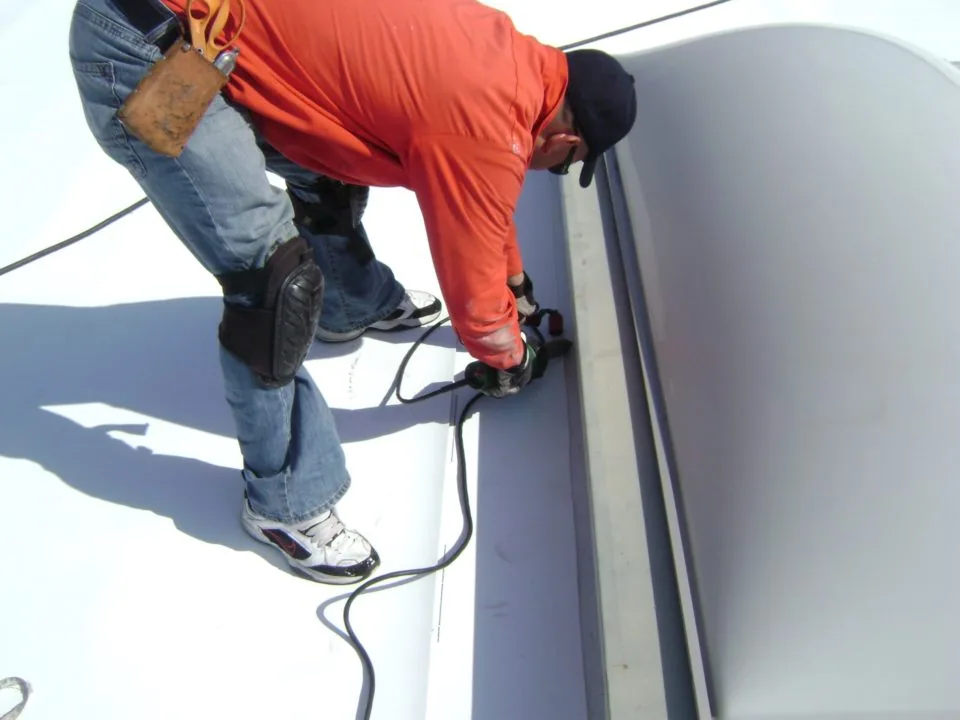
A test cut is the direct way to check layers at a selected point. We use the infrared map to choose locations where confirmation can answer a repair or replacement question, then document membrane, insulation, attachment, and deck conditions. The sample points should represent the roof areas being evaluated rather than cluster only where the image looks dramatic. We repair each cut after inspection and record its position. If findings differ from the expected pattern, we expand or revise the survey area instead of treating the first sample as a complete picture.
State resilience planning lists roof and structural impacts from snow and ice among the effects of severe winter storms. For a Springfield survey, that context makes drainage and insulation the first things to check before a scan is read. We pair the scan with leak timing, roof records, and field checks. A recover review or replacement scope can then use confirmed findings rather than image interpretation alone.
When a test cut confirms wet insulation, we estimate the removal boundary from the sample, adjacent observations, and roof layout. If only one point is sampled, we do not extend that result across every connected section without additional support. The repair team needs to know the depth of wet material, the condition of the deck, and whether surrounding insulation can remain. We mark that work separately from membrane restoration so the owner can approve the concealed-layer repair and surface tie-in as related but distinct tasks.
Map the work boundary
Once test points are confirmed, we draw the affected boundaries on a roof plan and separate repair areas from sections that need further investigation. The work scope may include removal of saturated insulation, deck repair, a compatible membrane patch, or a larger section renewal. It should also say which areas were scanned but not confirmed. This distinction helps the owner compare pricing and schedule without treating every anomaly as a demolition zone.
At a Springfield property with multiple additions, transitions can alter drainage and insulation depth. We annotate those changes and identify where a separate sample is needed. If the roof includes several systems, each assembly gets its own interpretation notes. For water movement at low points, a drainage inspection should accompany the moisture review. Any proposed alteration is checked against applicable permit requirements by the owner and project team; Springfield’s Building Division enforces the state building code and related conditions.
Give the owner usable evidence
The report includes survey conditions, a labeled roof plan, infrared images, visible reference photos, test locations, and field-confirmed results. It distinguishes readings from conclusions and identifies limits such as obstructions or unsuitable weather. The owner can use that record to approve test cuts, request a defined repair, or compare replacement alternatives. A map without next steps leaves the maintenance team to guess which location mattered.
We review the findings with the facility contact and list open questions, completed repairs, and a sensible follow-up trigger. A condition report can keep survey evidence with the roof history, while capital planning can organize confirmed work across multiple buildings. Send roof drawings, leak history, access rules, and the decision under consideration. We will propose the survey area and confirmation methods needed to turn the temperature pattern into a work scope. Findings are dated, so a repeat survey after a repair can show whether the wet boundary has changed.
Commercial Roofing Questions
Does infrared prove that insulation is wet?
No. Temperature patterns can guide investigation, but test cuts or other field checks confirm the assembly. We label readings separately from verified moisture conditions.
What weather is suitable for the scan?
The roof needs conditions that create a useful temperature contrast. Recent rain, snow cover, standing water, clouds, and surface shading may limit interpretation.
How do you choose test-cut locations?
We compare anomalies with leak history, roof layout, drains, and assembly changes. Samples are placed where a confirmed condition could change the repair decision.
Can the survey determine the repair price?
It helps define investigation areas, but pricing depends on confirmed layers, removal limits, deck condition, access, and the selected repair or replacement scope.
What if the roof has several membrane types?
We separate areas by assembly and note where the image interpretation may differ. Each type may need distinct test locations and repair materials.