A distribution center never gets a quiet week, so the roof schedule has to fit around trucks, shifts and peak volume, not the other way round. On Springfield, MA fulfillment buildings, we start by asking when the dock doors are busiest, where the lifts can stand without blocking a trailer and which interior zones cannot take a drip. Then we walk the roof. The membrane, the dock canopies, the rooftop units and the drains each fail in their own way, and the repair order depends on what sits underneath. A leak over a conveyor or a sorting floor is an operations event first and a roofing event second, so our plan names the people to call before the first lift arrives. The general contractor or facility lead receives the findings as a marked plan with numbered defects and photographs, which can be circulated to operations without translation.
Inspect the dock side first
The dock side of a distribution building takes the most wear. Canopies over doors collect water and debris, and the edges next to the truck court see vibration, impact and de-icing salt. We check canopy flashing, gutters, downspouts and the wall-to-roof transition above each door, and we look for staining that points to water running behind a cap.
Edge metal also deserves a close look; in 2011 an EF3 tornado took roofs off some large commercial brick buildings in the city, and perimeter uplift is where that kind of damage starts. On a big, flat distribution roof, uplift builds at the perimeter and corners first. We check fasteners, cleats and seams along every edge and mark loose metal on the plan for repair before the next storm.
Winter salt and ice add a second wear pattern at the dock edge. Salt spray corrodes metal, ice builds in gutters and downspouts, and meltwater runs back under caps when the drainage path is blocked. We photograph gutters and downspouts at the dock and clear ice-prone points before freeze. If a gutter has pulled from the fascia, we repair it with new brackets, not sealant, because a gutter loaded with ice will fall again.
Plan work zones around shifts and peak weeks
We divide the roof into work zones and sequence them against the operating calendar. Quiet weeks and weekend shifts are the best windows for tear-off. During peak periods we limit work to repairs that can be sealed within a shift. Each zone has a defined start, finish and closeout, and the foreman signs off with the facility lead before the crew leaves. If peak volume changes the plan, the zone boundary moves, not the sealing rule, so the building is never left open for the sake of speed.
Access is its own problem. Cranes and lifts need a staging area, and the truck court is rarely available. We look at the site for alternate staging and plan material deliveries around trailer movements. For buildings near the I-91 and I-291 corridors that frame downtown and the North End, truck routes and delivery timing add another layer of coordination. We confirm the route with the carrier, check clearance for the lift and avoid trailers staged overnight, because a crew that waits an hour for access is an hour not roofing.
Test drainage and snow load behavior
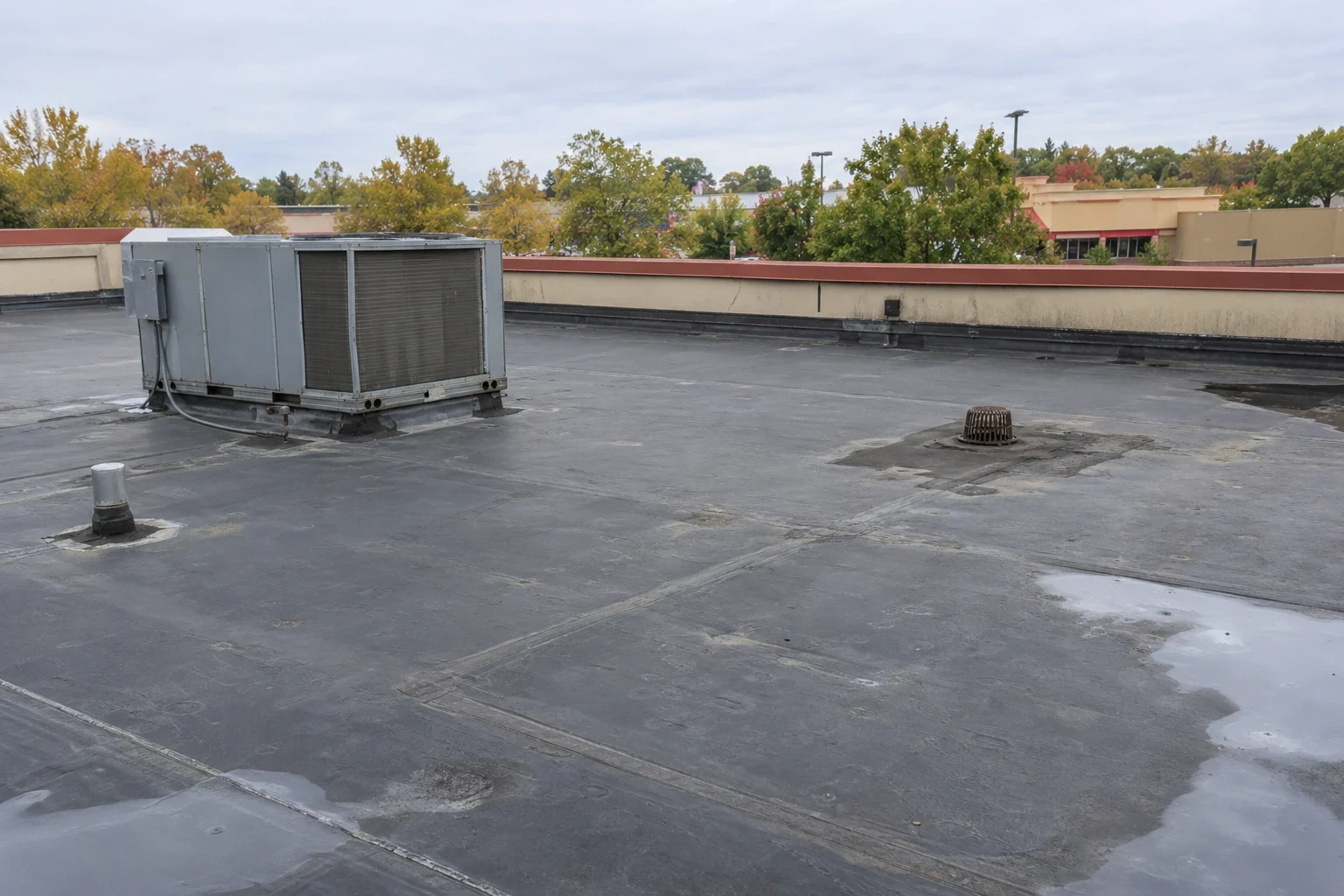
A distribution roof is large, flat and often has few drains. When a drain fails, a shallow pond becomes a heavy load quickly. A large flat roof collects snow and holds it; the state rates severe winter storms a high-likelihood hazard and counts snow and ice weight among the causes of roof damage. We trace flow to each drain, check overflow scuppers and look for sag or deflection near drains and walls.
Rooftop equipment adds weight and collects drifts. We mark units, curbs and platforms and check the membrane around them. Around the Wason/North Industrial Park, an urban renewal area in the city's North End, drainage is a routine check, not an occasional one. Our commercial roof inspection includes drain testing and a photo record of each outlet.
Equipment platforms and conduit runs deserve a separate check. Roof-mounted units on sleepers can block drainage or hold water against the membrane, and conduit laid on the roof can wear through the sheet. We lift or shift a few to inspect the surface beneath, mark the ones that should be raised on stands and flag any that trap water.
Match the scope to the roof's condition
Scattered leaks over dry insulation call for repair. A sound base under a failing membrane can take a recover, if the structure and code allow. A roof with wet insulation over a large share of its area needs removal. We draw the line with a moisture survey and cores, then price each path. The proposal lists first cost, expected repair frequency and the access each path needs, and it names the condition that would change the recommendation.
Compared with a smaller warehouse, a distribution center has more equipment, more foot traffic and higher consequences for downtime, so we weigh durability and ease of repair more heavily. For food or temperature-sensitive operations, cold storage roofing adds vapor control and insulation concerns. When a leak is active and the permanent plan is not ready, emergency roof repair protects the building and is recorded separately.
Keep the portfolio record
Many distribution owners hold several buildings. A common record format lets them rank roofs by condition and spend where risk is highest. Chicopee has four industrial parks, with more than 3,200 employees by the Westover Metropolitan Development Corporation's count, and an owner with more than one building there can compare roofs on a common record.
The turnover file lists the membrane, insulation, drains, curb locations, repair history, photographs and the next inspection trigger. It also lists the work zones, so the next contractor knows how the previous job was sequenced and which areas were closed under operating pressure. It also records the paths crews use to reach rooftop units, since protective pads on those paths cost less than the patches bare traffic requires.
Commercial Roofing Questions
Can roof work happen during peak season?
Limited repair work can, in zones that close within a shift. Larger projects are better planned for quieter periods, and tear-off in particular belongs in a window when noise, dust and debris do not collide with peak shipping. We schedule against your operating calendar and state the risk of each date.
What is the main risk on a large flat roof?
Water that cannot reach a drain, and wind uplift at edges. We test drainage and check perimeter securement first, then look at rooftop equipment that may be trapping water or wearing the membrane.
How do you protect inventory below?
We ask for sensitive zones, close work areas daily and use temporary protection above critical areas. Leak calls go to a named contact, and the crew checks the interior during the work if the facility allows escorted access.
Do dock canopies need separate attention?
Yes. Canopies collect water and debris and take wear from trucks. We inspect flashing, gutters and drainage at each one, and we check that downspouts discharge away from the door so ice does not form across the dock apron.
What should I send to start a review?
The building address area, roof age, leak locations, shift schedule and access limits. If you hold roof plans or warranty papers, send those too.