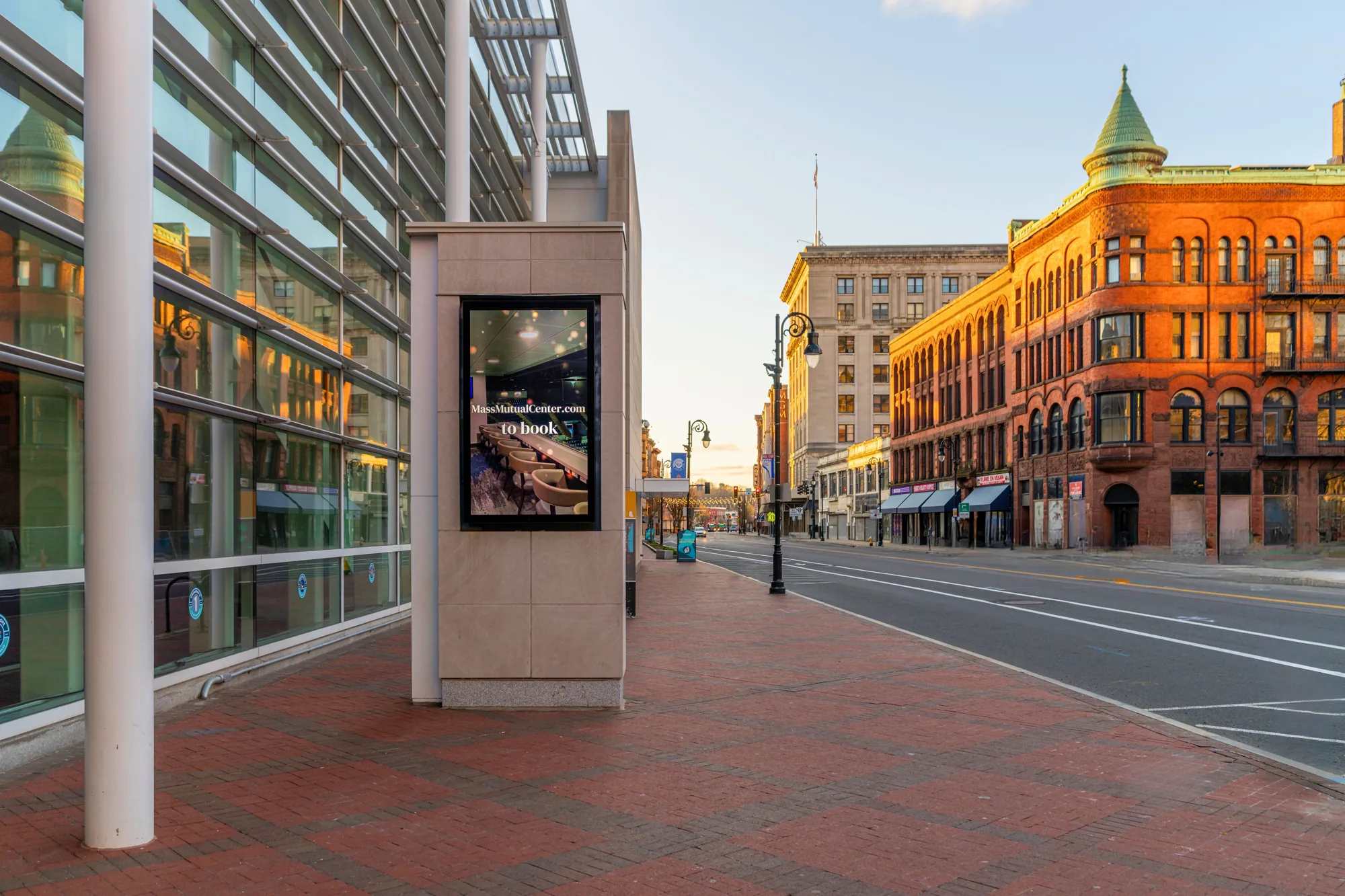
A 3.2-mile corridor does not have one roof problem; it has many, and the first job is to sort them. State Street runs from East Columbus Avenue to Berkshire Avenue as a major east-west connector in Springfield, MA, and the city describes frontage that includes businesses, residences, parks, cultural amenities, institutions and historic assets. A roof on the western end may have little in common with one on the eastern end except the weather and the sidewalk below it. We start each State Street call with the building's use, its roof history and the street-side constraints, then walk the roof and write a scope that fits. The sort comes first because a corridor budget gets spent well only when the repairs are ranked. The owner gets the first findings on a drawing of the roof, every defect numbered, photographed and placed in order of consequence.
Protect the street edge
The city's State Street corridor project included drainage, hydrant work, signal work, street lighting, curbing and sidewalk replacement. Work along a corridor that has seen that kind of investment deserves care at the curb. Lift outriggers, dumpsters and material pallets can crack paving, block hydrants and hide signage. We survey the frontage before we book equipment and use pads, plates and spotters to protect curbs and walks.
Hydrants and signals are not ours to block, and the city expects them clear. We map them on the staging plan, keep lanes open for emergency access and schedule deliveries when traffic is lightest, and we confirm the plan with the owner before the first truck arrives. If a street closure is needed, we help the owner or the general contractor prepare the permit request with dates, equipment and a safety plan. Those items are priced as their own lines so the owner sees what the street edge adds.
Deliveries follow the same logic. A truck that stops on a travel lane to unload a roll of membrane is a traffic problem and a safety problem, so we arrange a loading spot, a flagger when needed and a delivery time that matches the street's quiet hours. When a lift must stand in the lane, we set cones early, post signs and keep a spotter on the ground until the lift is down.
Sort roofs by the use below them
A corridor with businesses, residences, institutions and historic assets mixes building types. A storefront with an apartment above has different leak consequences from an office with a server closet. An institutional building may have rules about hours, access and documentation. A historic asset may call for review of visible changes, and we ask early whether any approval applies before we price a membrane color or an edge profile. Where review applies, we assemble the roof description, product data and photographs the reviewer needs and build the review time into the schedule so material is not ordered ahead of an approval.
The first walk uses the same checks on every building: edges and parapets, drains and scuppers, penetrations, seams, rooftop equipment and interior stains. Then we rank findings by what sits below. Office building roofing turns on tenant notice and tracing complaints floor by floor, while apartment roofing adds resident notice and quiet hours. A restaurant roof adds grease and exhaust.
Inspect parapets, coping and shared walls
Buildings along a street like this can share walls or sit tight against neighbors. Water follows those joints. We trace stains along party walls, check counterflashing, coping and parapet caps and look at how rain from a taller neighbor lands on a lower roof. A shared detail needs a conversation with the adjoining owner, and we document the condition with photographs so the discussion starts from evidence. Sometimes the cause of a leak is a drain on the neighbor's roof that discharges onto ours, and the right fix is a splash pad or a corrected outlet on one side or the other.
Edges matter for safety as well. Loose coping or metal flashing can fall onto a sidewalk, so we flag anything that needs securing at once. Edge metal, coping and gutter work follows a standard sequence: find the movement, secure the substrate, rebuild the joint and test the water path. The June 1, 2011 EF3 tornado that crossed Springfield removed roofs from some large commercial brick buildings, which is why we check edge securement on every visit, looking at fasteners, cleats and lap joints along the entire perimeter.
Prepare drains and edges for freeze
Severe winter storms sit in the state's high-likelihood group, and snow-and-ice roof damage counts among their effects. On a street with sidewalks below, ice sliding from a roof is also a pedestrian hazard. We check drains, scuppers and gutters before freeze, look for ice-dam setups at eaves and parapets and recommend retention or clearing where a slide could reach people.
When a leak does appear, commercial roof leak repair begins with the interior location and the weather, then traces the water path on the roof. Temporary protection goes on first if water is entering, and the permanent repair follows when the weather and the permit allow. Winter repairs may use cold-weather materials and shorter work windows, which we price openly so the owner knows why a patch in January costs more than the same patch in June.
Choose the scope and keep one corridor record
A few leaks over dry insulation call for repair. If the membrane is spent but the base is sound, a recover can fit. Where insulation is wet in several places, those sections are removed. We price each option with the access it needs and the timing it requires, and we state what would change the recommendation, for example wet board found in a core or a probe that opens more laps than expected.
Owners with several buildings along the corridor can use one record format: system, age, drains, penetrations, repairs and photographs. The format also works for properties in nearby areas such as the Northeast Downtown District or the Metro Center business and government district, so a portfolio can be ranked on one scale. Preventive visits before freeze and after the thaw keep that record current and catch the open laps and clogged outlets that become spring leak calls.
Commercial Roofing Questions
How long is State Street?
The city describes it as a 3.2-mile east-west connector from East Columbus Avenue to Berkshire Avenue, with business and institutional frontage.
How do you protect the sidewalk and curb?
With pads under outriggers, covered walkways, spotters and a staging plan that keeps hydrants and lanes clear. We help with permits when a closure is needed.
Do historic buildings need special approval?
Visible changes may need review. We ask early, gather the product data and photographs the reviewer needs and build review time into the schedule, so material is not delivered before the approval it depends.
What if my building shares a wall with a neighbor?
We document the shared detail, check how water crosses it and coordinate with the neighbor when the repair crosses the line, with photographs of the joint before and after.
What should I check before winter?
Drains, gutters, scuppers and any place where ice could slide toward a walkway. Report anything blocked or damaged so we can clear or repair it, and send a dated photo if you can, since the condition at the time of the report helps us decide how urgent the visit is.