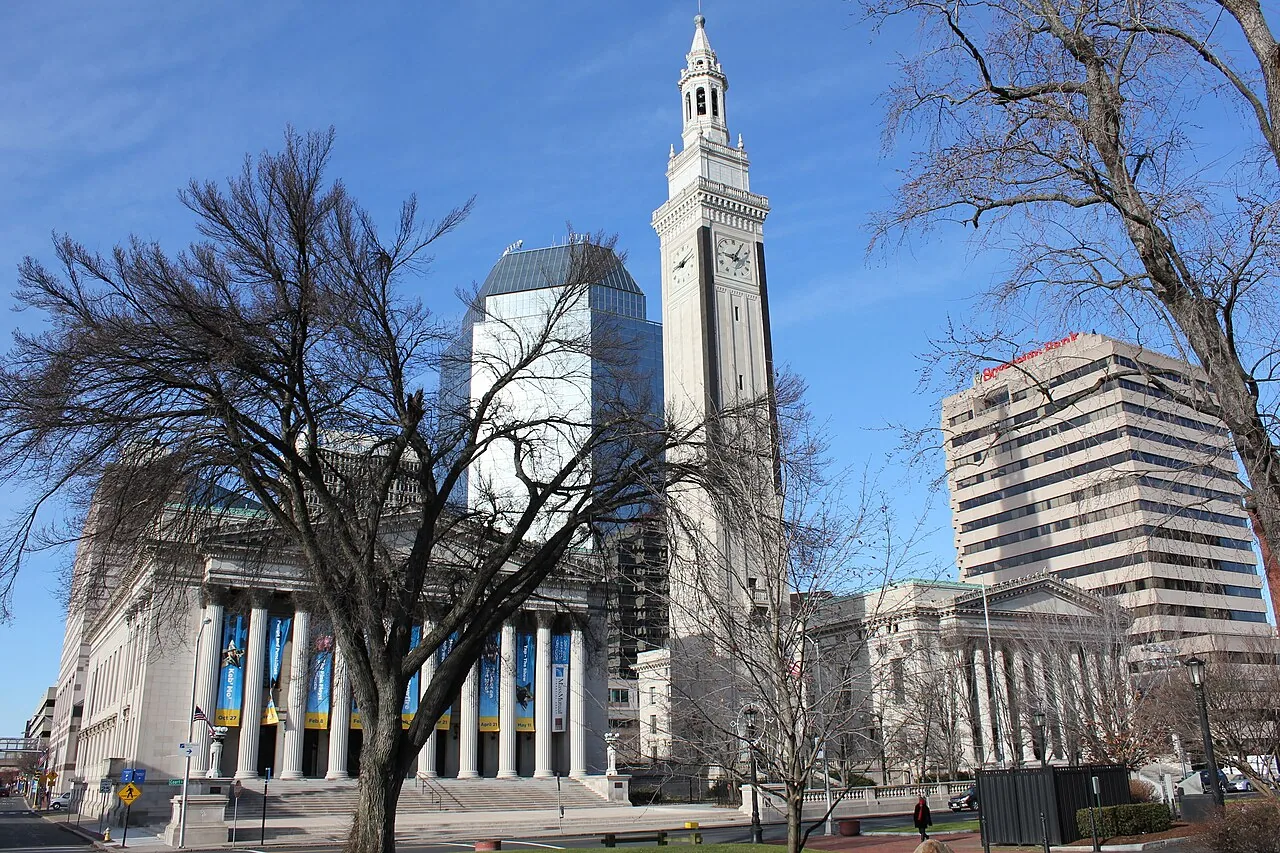
A building that sits unused loses its roof before it loses anything else. Springfield's 2021 Northeast Downtown plan addresses the streets and development around Liberty, State and Harrison Streets and the downtown connections, and it treats older downtown infrastructure, vacant or underused parcels and street circulation as constraints on redevelopment. For a roof owner or buyer in this part of Springfield, MA, that language points to two kinds of roofing work: keeping an occupied storefront building dry, and deciding what to do with a roof over a space that is quiet, for sale or waiting for a plan. We start with a survey either way, because the right move for a roof depends on what it is protecting and how long it must last. What the owner or buyer gets first is a roof sketch with each defect numbered, photographed and ranked.
Stabilize roofs over vacant or underused space
A roof over an empty building still sheds rain, snow and ice, and nobody is inside to notice a leak. By the time water shows on a ceiling, insulation can be saturated and interior finishes damaged. We recommend a survey, a drain clearing and temporary repairs at the openings, then a schedule of checks after storms and thaws. The cost of that protection is small compared with the loss from a long-running leak.
Security matters for a vacant building too. Open hatches, loose skylights and missing coping invite water and trespass, so we check access points, secure what we can and report anything that needs the owner's attention, including any condition that affects the building's insurance. A dated photo set at each visit shows the building's condition over time, which helps an insurer or a buyer who asks how long a problem has existed.
Cost and timing follow the horizon. A stabilizing repair is quick and inexpensive, and it buys time. A recover costs more and needs a dry base. A full replacement costs the most and lasts longest, and it makes sense when the new use will keep the building for many years. The three sit side by side, each with its price, its likely maintenance and its access demands, so the choice is a comparison and not a guess. We also name what would change our recommendation, such as a core that shows wet board.
If the building is headed for redevelopment, the roof decision follows the plan. A roof that must last two years needs a different spend from one that must last twenty. We write the options with the horizon in mind: a stabilized repair that holds until the work begins, a recover over a sound base or a full replacement tied to the new use. A due diligence roof survey gives a buyer the condition facts before the price is set.
Inspect the roofs above ground-floor commercial space
The plan connects storefront activity and ground-floor commercial uses to safer circulation, parking and pedestrian access. Roofs above those storefronts share the sidewalk with customers. Parapets, coping, cornices and canopies get checked from the roof and, if it helps, from a lift, and anything that could fall is flagged the same day. Edge work in a pedestrian district needs covered walkways, barricades and spotters, and we plan them with the owner.
Inside, leaks over retail or office space mean lost sales and damaged finishes. We trace stains to their source before recommending a repair, since water travels along deck flutes and plenum spaces. A leak that appears in one bay may start at a parapet corner two bays over, and a repair at the stain misses it. Tenants of ground-floor space also deserve notice: a short written plan with the days, the hours and a phone contact prevents complaints and keeps the entrance open.
Respect the age of what is under the membrane
The plan names older downtown infrastructure as a constraint, and a building with a long history can have layered roofs, mixed flashing and a deck that has taken on years of moisture. A test cut shows layers, insulation and deck, and moisture mapping shows how far water has traveled. If the deck is soft or the structure is in doubt, an engineer reviews before we propose more weight. Flashing at party walls, chimneys and old penthouses gets special attention, since those details were often patched many times and now rely on sealant instead of metal.
Drainage is another age issue. Internal drains and leaders can crack or clog, and a parapet-lined roof can fill like a tub if an outlet fails. We trace each drain, check overflow openings and look at the walls below for staining. Roof drains and scuppers repairs are often the highest-value item in an older building's scope because they protect everything else.
Plan for downtown access and Springfield weather
Downtown streets give limited room for lifts, dumpsters and deliveries. We survey the frontage, check for hydrants and signs, plan the lift location and time deliveries for low-traffic hours. If a lane closure or sidewalk occupation is needed, we help the owner assemble the permit request: the dates, the equipment and the safety measures.
Springfield has a clear weather record. Winter storms are rated a high-likelihood hazard statewide, with snow and ice weight named as a roof hazard, so drains and drift areas are checked before freeze. The Weather Service survey of the 2011 EF3 tornado recorded extensive damage on the city's south side downtown. After strong wind, wind damage roof repair starts with loose metal at the edges and works inward.
Choose the scope and keep one record
When insulation stays dry under a few leaks, repair is the answer. If the base is sound and the sheet is worn out, a recover may fit, while wet insulation in several areas means those sections are removed. For redevelopment, the options are tied to the plan and its timeline, and we price each with its access needs.
The record lists the layers, deck condition, moisture map, drains, repairs and photographs, with the dates of each visit and the weather at the time. Owners with several downtown holdings can add the Chestnut Street corridor and the Court Square downtown area to the same record, and a regular preventive roof maintenance visit keeps it current.
Commercial Roofing Questions
What does the Northeast Downtown plan cover?
It addresses the streets and development around Liberty, State and Harrison Streets and downtown connections, and it treats older infrastructure, vacant or underused parcels and street circulation as constraints on redevelopment.
Should I fix a roof on a building I plan to redevelop?
Stabilize it to the horizon of the plan. A short-term hold needs drains cleared and openings sealed. A longer hold may justify a recover or replacement, and the survey tells us which, because it shows how much life the existing roof has left.
How do you handle sidewalks and pedestrians?
With covered walkways, barricades, spotters and a staging plan, and with permits when a closure is needed, all agreed with the owner before mobilization.
What does a due diligence survey include?
System identification, layer count, moisture map, drain and penetration review, photographs and a priced list of near-term items, plus a note on what an engineer should confirm before the sale closes.
How often should a vacant building's roof be checked?
After major storms and thaws, and before winter. Clear drains, look for new openings, check that nothing has been disturbed and record what you find with dated photographs.