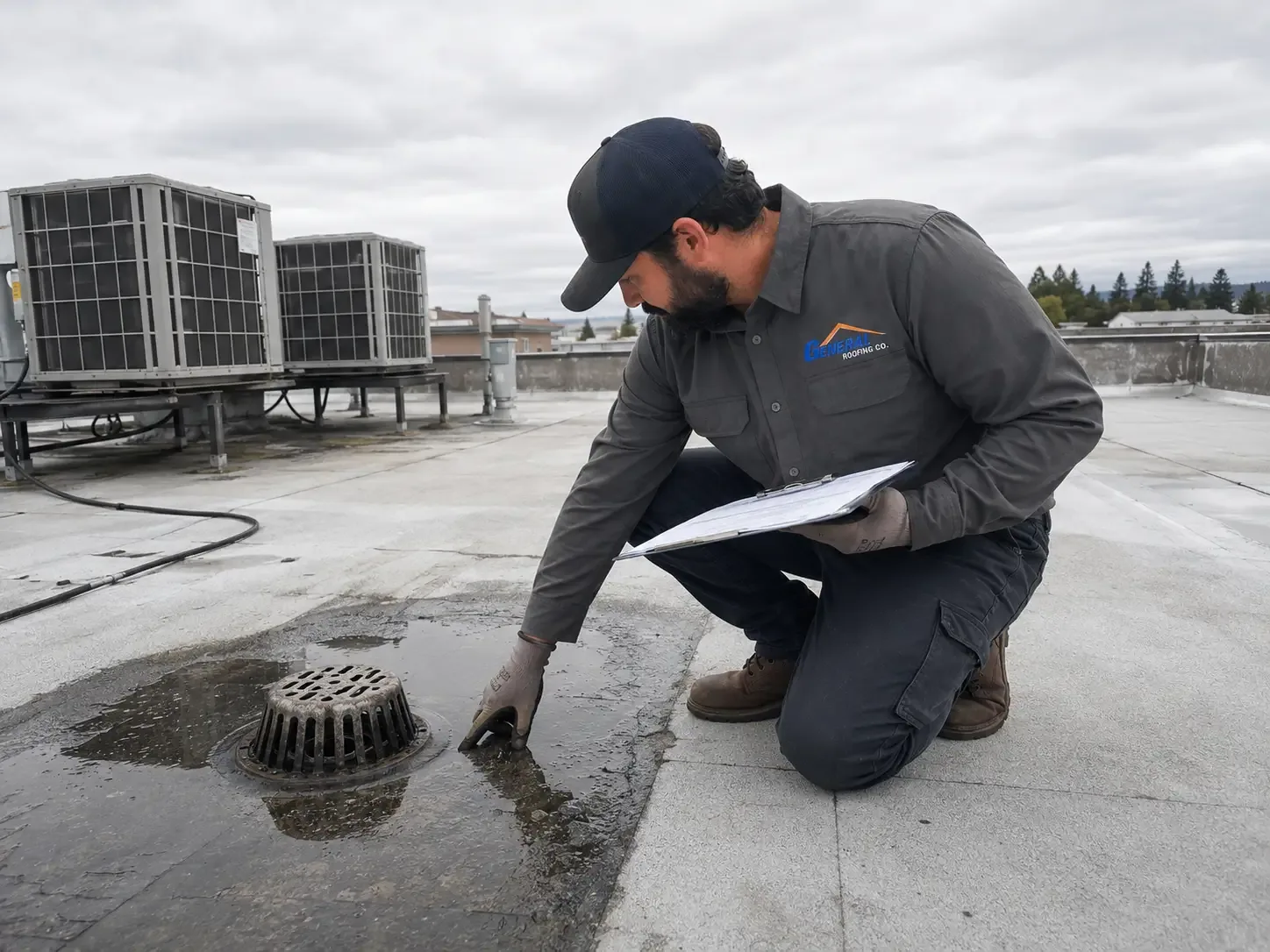
A transaction review needs a roof picture that separates visible condition from missing information. We inspect the assembly, photograph details, review available repair records, and identify questions that could change a near-term scope. Springfield properties range from government and office buildings in Metro Center to healthcare uses in the Medical District. The inspection plan follows the actual building, access, and roof sections rather than assuming similar age or use means similar condition. We give the buyer or owner a field-based record to discuss with its advisers.
Gather what is known
Before the roof walk, we review plans, prior surveys, warranties, leak logs, repair invoices, and any reported equipment changes. We compare the records with what can be observed on the roof and list differences for follow-up. A missing date or unknown system type remains unresolved until a document or inspection confirms it. This lets an acquisition team separate a confirmed repair need from an assumption carried forward from an older file.
A commercial roof inspection records seams, membrane, drains, flashing, parapets, penetrations, and access limitations. Permits and closeout records can clarify what work was documented before the sale. We note which records the seller provides and compare them with the current roof walk; a file history does not replace inspection of the assembly and details. A condition report can organize photographs and action items for the transaction file.
We identify any area that could not be entered or safely reached. If a roof is covered by equipment or stored material, the report describes that limit and the inspection needed to close it. That prevents an inaccessible section from being mistaken for a defect-free section.
Inspect the assembly and details
We examine surface wear, open seams, prior patches, membrane attachment, edge details, drains, overflows, equipment curbs, and visible insulation or deck issues. Interior leak reports are compared with roof conditions because water can travel before it appears inside. Where moisture is suspected, an infrared survey can guide test locations; a sample or direct check confirms concealed layers. We mark the roof plan so each finding can be priced or revisited without repeating the entire survey.
Springfield's June 2011 tornado caused roof losses at commercial buildings. For a transaction survey, that history points to a question about this asset's documented repairs, not an assumed condition. We inspect current seams, edge attachment, and flashing, then compare any seller-provided event records with what the roof shows today. A wind-damage review can separate an event-related scope from ordinary wear.
State Street connects businesses, residences, parks, institutions, and historic uses across Springfield. For a property along this corridor, we note roof access, staging, and any operating limits that affect inspection or repair timing. We verify each building's roof system in the field or mark it as unconfirmed.
Describe scope and uncertainty
Each finding receives a location, supporting photograph, apparent extent, and next action. We distinguish immediate water entry, maintenance, localized repair, further testing, and potential replacement planning. If the assembly cannot be opened during the survey, the report says what remains concealed and how a test would change the conclusion. The buyer can then decide whether to request additional access, include an allowance, or revisit the scope after closing. A buyer can sort findings by what is known now, what needs a test, and what depends on a later opening. That distinction is useful when a transaction schedule leaves little time for intrusive work. We can describe the limits of a visual review, show where a sample would answer a specific question, and keep the recommendation tied to that question. A reserve or repair allowance should reflect the information available and the access still needed; the survey does not replace a contractor bid or structural evaluation.
Cost drivers include roof area, removal depth, wet insulation, deck condition, access equipment, drainage correction, and occupied-building sequencing. We state those factors without inventing a price or claiming an exact service life. A capital planning review can place confirmed repairs and unanswered tests on separate budget dates. A roof asset register can carry the baseline into the owner's maintenance system.
For a specific assembly, we identify the membrane and detail only when documents or inspection support it. A wind damage review and a modified-bitumen system need different repair materials and tie-ins. If system type is unknown, we keep the question open instead of selecting a method from the building's appearance.
Give the team a usable record
The report can include roof plans, dated photographs, observed conditions, records reviewed, inaccessible areas, test results, and action priorities. We state whether each issue was observed, reported, or inferred from a test. That helps a buyer compare the survey with seller disclosures and contractor proposals without blending different kinds of evidence. For refinancing, the same record can help an owner explain which work is complete and which items remain in planning. We keep the photo, location, and action connected so a later reviewer can distinguish an old repair from a new observation. When a proposal uses different quantities or assumptions, the buyer can identify what changed and request a focused follow-up rather than treating unlike scopes as equivalent. If a condition needs further investigation, the report names the sample or access needed.
On a healthcare property in the Medical District, an active building schedule can affect how a roof repair is staged after closing. The inspection file records owner-provided access constraints and any area needing coordination. A phased work review can help the new owner set project timing without changing the condition finding. We can also identify whether an emergency repair or planned capital scope is the next practical step.
Answer the transaction question
Before the survey, tell us whether the team needs a general condition baseline, a specific leak review, a replacement estimate, or follow-up testing. We set the inspection limits around that question and the access available. The final report lists what the inspection covered and which decisions need more information. It is a roof record for the transaction team, not an engineering opinion on structural capacity or a prediction of future performance.
Send plans, seller records, known leak locations, site access rules, and any lender or owner format requested. We will inspect the roof, map findings, and separate repair needs from open questions. If several buildings are part of the transaction, identify the order in which access is available and any operating hours that affect the walk. We can keep separate roof records while using a consistent condition format, making it easier to compare urgent work with longer-range needs. The agreed scope should identify which roofs, sections, and records are included before the inspection begins. If the report leads to pricing, we can define a separate work scope tied to confirmed roof conditions and the building's operating schedule.
Commercial Roofing Questions
Can a roof survey identify every concealed defect?
No visual survey can show every concealed layer. We identify suspected areas and recommend a test or access step when the result could change the scope.
What records should the seller provide?
Plans, warranties, repair invoices, leak logs, prior surveys, permits, and equipment changes help establish the roof history. We note which documents were available and what remains unknown.
Will the survey include a repair estimate?
The report can define repair locations and assumptions. Pricing may need a separate scope after access, quantities, material compatibility, and concealed conditions are confirmed.
How do you report an inaccessible roof area?
We name the section, explain the access limit, and state what visit or equipment could reach it. The report does not label an uninspected area as sound.
Can the report be used after the transaction?
Yes. The owner can add repairs, inspection dates, and roof changes to the baseline. We keep the findings tied to each building and roof section for later comparison.