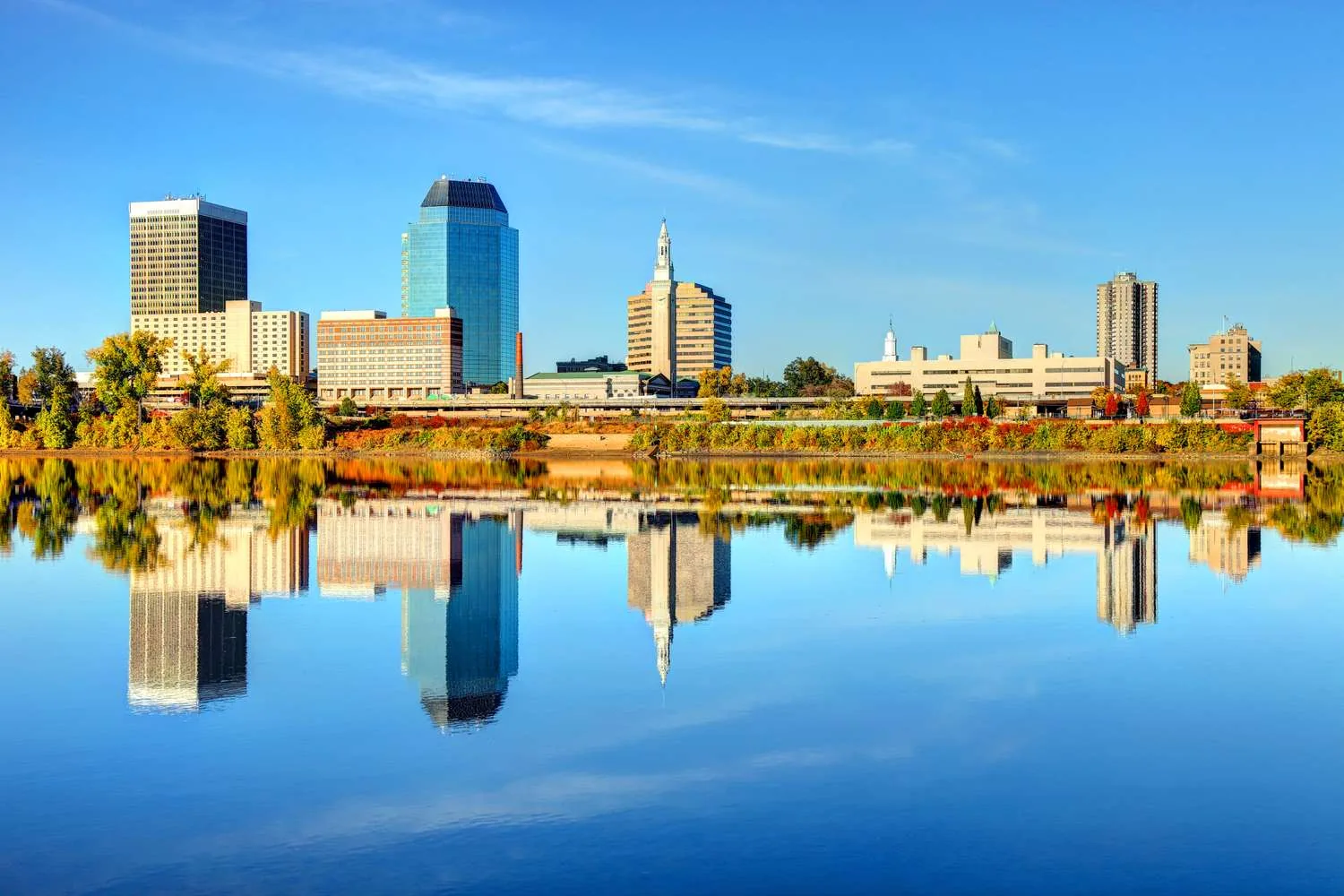
Metro Center roofs answer to more than their owners: they answer to the public that walks past, the staff who work beneath and, on event nights, the crowd that fills the streets. The city's neighborhood profile describes Metro Center as Springfield's central business and government area, about 620 acres on the western edge, bounded by I-291, Union and Howard Streets, Federal Street and the Connecticut River, with government, business, cultural and institutional uses. For roofing, that means work zones near sidewalks, tenants who cannot lose a floor and schedules that bend around public use. We start with the roof history and the people beneath it, then plan access, protection and sequence before any crew arrives. The first deliverable for a facility lead or general contractor is a marked plan of the roof with each finding numbered, photographed and ranked.
Protect the sidewalk and the street edge
Where a roof meets a public sidewalk, the first plan is overhead protection. Debris, dropped tools and loose material can reach people below, so we set covered walkways, barricades and spotters before the first tear-off or edge repair. We confirm what the city requires for sidewalk occupation, how long permits take and who must be notified, and we keep the permit paperwork with the job file so inspectors and managers can find it.
Edge work matters for another reason. Parapets, cornices and coping are exposed to freeze and thaw on any building, and loose caps or metal flashing can fall. We inspect edges from the roof and, where useful, from a lift, then flag anything that needs immediate securing, with a photograph and a position on the plan so the repair can be scheduled without a second visit to find it. A stained parapet joint or a displaced coping stone is a safety item before it is a leak.
When edge work needs a lift on a public street, we handle the permit request with the owner, set the cones and signs, and schedule the move for the lowest-traffic window. The cost of closures, flaggers and early starts appears in the proposal as its own line, so the owner sees what the street edge adds to the project and can decide whether to phase it.
Match the method to the kind of building
The profile names a mix of institutional uses, including the Quadrangle, the Central Library, the Federal Armory and Museum, the MassMutual Center, Symphony Hall and STCC, within a district of offices, retail, public and educational buildings. Those names show the range of the district. A public library, an office tower and a college building each need their own inspection, and each is measured by the same questions: what is the roof, what is wet, what is below it and when can we work.
Public and educational buildings often follow procurement rules, set work windows by term or event schedule and require clear documentation, including product data, warranty terms and the names of the people who will be on the roof. Our government building roofing and college and university roofing work are planned with those rules in mind. For private offices, office building roofing adds tenant notice and floor-by-floor leak tracing.
Schedule around public events and tenant hours
A district with cultural venues and institutions has event nights and class schedules. Noisy tear-off during a matinee or an exam week creates complaints, and a closed street on an event night changes delivery plans. We ask the facility contact for the calendar of events and the periods when work is not acceptable, then fit the roof schedule around them.
Quiet hours and early mornings suit the noisiest tasks. Deliveries may be timed before streets fill. Each day ends with the open area sealed and a photograph of the closeout, so staff and managers can see the roof is safe before the next event. If a storm threatens, we stop and secure the area first, regardless of what stage the work is in. A section that is open for an afternoon is a section that must be dried in before the first drop of rain.
Noise and odor need the same planning in a district full of occupied buildings. We choose low-odor adhesives where the roof allows, locate kettles and fumes away from intakes, and brief the building engineer before each phase. Where windows face a work zone, we warn occupants and close them when odor is likely.
Plan for river-side weather, drains and wind
A tornado rated EF3 passed over the Connecticut River at the Memorial Avenue Bridge on June 1, 2011, and the Weather Service survey recorded extensive south-side downtown damage. The track is a reminder to check perimeter metal, flashing and roof equipment attachment on every visit. After strong wind, tornado damage roof repair and wind repair start at edges and rooftop equipment.
Drainage deserves the same attention. Roofs on civic and institutional buildings can have interior leaders and internal gutters that fail slowly. We trace each drain, check strainers and overflows and use roof drains and scuppers checks to separate a clog from a slope problem. In winter, snow and ice can block outlets and load a roof, which the state's resilience plan counts among the impacts of severe winter storms. Rooftop equipment gets a winter check too, since drifted snow against a unit can pack against a curb and melt into a flashing joint.
Choose the scope and clear the permits
Local leaks over dry insulation point to repair. A worn membrane over a dry base may take a recover. Wet insulation in several areas calls for partial or full replacement. We provide those options with cost, timing and access for each, and we state what would change the recommendation, such as a core sample that shows wet insulation or a structural question that needs an engineer.
Springfield's Building Division enforces the state code and reviews plans for alterations and repairs, and Massachusetts applies its own commercial energy code. We prepare the roof plan, product data and detail sheets the reviewer needs, and we note the fastening pattern, insulation values and flashing heights so the review does not stall on a missing sheet. For owners with buildings in neighboring areas, such as the Court Square downtown or the Northeast Downtown District, a single record format lets the portfolio be compared on one scale. A short summary at the front of the record lists the open items by roof section, so a facility lead can brief a board or a tenant without reading every photograph, and the dated entries show how long each item has been open.
Commercial Roofing Questions
What does Metro Center include?
The city profile describes about 620 acres on the western edge of Springfield, bounded by I-291, Union and Howard Streets, Federal Street and the Connecticut River, with government, business, cultural and institutional uses.
Can roof work happen near public sidewalks?
Yes, with overhead protection, barricades, spotters and any permits the city requires. We plan the sidewalk edge before the crew arrives, and we keep a pedestrian route open or marked at all times.
How do you handle event nights?
We ask for the event calendar, avoid noisy work on those days and seal the roof before crowds arrive. Deliveries are timed before streets fill.
Do public buildings need special paperwork?
Often they follow procurement and documentation rules. We provide scopes, product data, photographs and closeout records in the format the owner requires.
What is the first inspection step?
Edges, drains and penetrations. We check parapets, coping, flashing, internal drains and rooftop equipment, then follow any leak to its entry point.