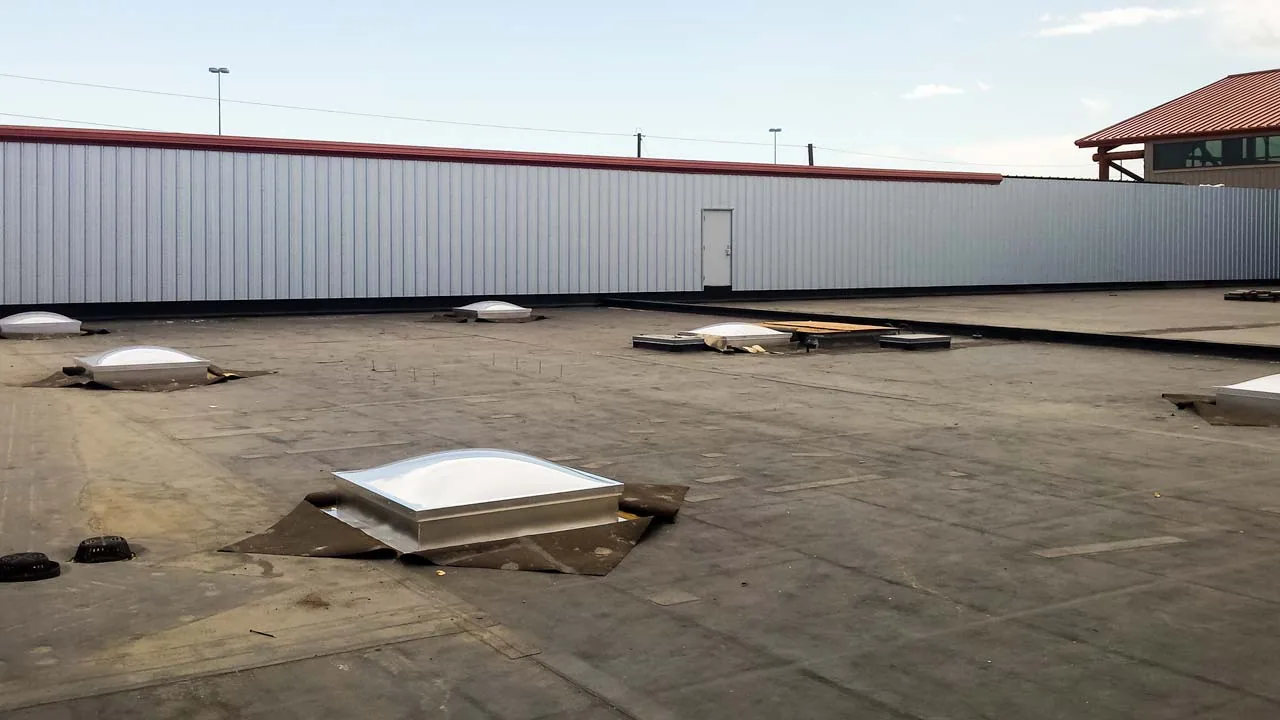
Water left beside a drain after the surrounding roof dries points to more than a housekeeping issue. In Springfield, snow and ice can slow outlets, then thaw water tests the same low areas and seams. We trace the path from roof section to drain, scupper, overflow, and discharge point before deciding whether cleaning or construction is needed. The City’s State Street work included drainage and curbing, a reminder that water routes matter at grade as well as on the roof. On properties near State Street or East Springfield, access and discharge conditions are checked at the actual building.
Follow the outlet path
We locate each drain bowl, strainer, scupper, overflow, leader, and accessible discharge point. The roof walk checks for debris, loose strainers, blocked openings, damaged metal, and sealant failure. We also compare the outlet elevation with nearby seams, curbs, and low points. A drain can be open yet still fail to collect water when a cricket is missing or insulation has settled. We note what is visible and identify any section that requires a closer test.
Springfield’s 3.2-mile State Street corridor project included drainage work along with hydrants, signals, lighting, curbing, and sidewalks. Water routes at street level and on the roof follow the same rule: the discharge point decides whether the whole system works. We inspect roof drainage as a system, from collection to discharge. A roof inspection can record the wider assembly, and ponding-water repair can address a persistent low area after its cause is established.
Distinguish blockage from slope
Debris at a strainer is different from water that remains because the deck or insulation has settled. We photograph water marks and compare their extent with roof contours, drains, crickets, and overflow locations. If an outlet is blocked, clearing it may restore flow. If water collects outside the drain bowl or crosses a seam before reaching it, the scope may need tapered insulation, a cricket, or reconstruction of the drainage detail. We do not use a coating to fill a depression without checking the assembly beneath it.
The state’s 2023 resilience plan lists snow and ice weight on roofs and structures as a winter harm. A Springfield drainage review therefore checks how outlets perform during snow cover and thaw, when a small restriction can keep water at a detail longer. We record whether conditions were dry, wet, or limited by weather. If the roof can be safely observed after rainfall, that visit may show a flow path that a dry inspection cannot. The record states which observations support the proposed correction.
Correct the detail
Drain repairs begin with the substrate and the point where membrane meets metal or plumbing. We remove failed material, prepare sound surfaces, and install compatible flashing or seal components. If the drain bowl is loose, corroded, or set at the wrong height, the repair may require access below the roof. At a scupper, we check the opening, lining, edge, and wall transition. The overflow route must remain distinct and unobstructed so it can function if the primary outlet is overwhelmed.
The Building Division in Springfield applies the state code and permit conditions, reviews plans, and inspects repair work that touches a drain. When correction changes a roof assembly or penetrates a deck, we identify the permit and inspection coordination needed in the scope. For simple maintenance, we list the debris removed and the outlet checked. For construction, a gutter and edge review can address connected metal, while insulation and cover-board work may be needed if settlement or wet material affects slope.
Protect the building during work
Opening a drain detail can expose the roof to water, so we plan the sequence around forecast, access, and interior risk. The work zone is kept clear of active routes, and the opening is protected until the permanent repair is complete. If interior access is needed to confirm a leader or leak, we coordinate with the property contact first. We identify which drain is under repair and which outlet remains available to serve the section during the work.
I-91 and I-291 frame parts of Springfield’s downtown and North End geography. A roof repair near busy access routes may require staging coordination, but the building contact confirms the actual delivery and lift plan. We keep materials away from drains and leave a clean route at daily closeout. If rain threatens during the work, temporary protection must not block the outlet. The closeout notes any temporary condition and the weather window required to return for permanent completion.
Choose the right scope
Cleaning, repair, and slope correction address different causes. Cleaning is appropriate when debris blocks an otherwise functional outlet. A flashing repair is suited to a failed drain or scupper transition. A low area caused by compressed insulation or deck shape may need a designed drainage correction. We show the evidence for each option and identify whether a test cut or below-roof inspection is needed. This keeps a maintenance visit from being presented as a structural correction.
Costs and timing depend on outlet condition, access below the deck, material compatibility, number of details, and whether adjacent membrane or insulation needs replacement. When drainage issues recur across several areas, a capital planning review can sequence corrections by risk and access. For a broader view, preventive roof maintenance can track outlet condition between repair projects. Each recommendation identifies the roof area and the result the work is intended to achieve.
Record water movement
We document drain locations, photographs, work completed, materials, and any unresolved condition. If water was present, the report notes its location and the weather or surface condition during the visit. We identify outlets that were cleared, repaired, or left for further testing. A follow-up after rain or thaw can show whether the correction changed the flow. The property file should distinguish a clear drain from a roof section whose slope remains under investigation.
Send the roof plan, leak locations, reports of ponding, access rules, and any known drainage repairs. We will inspect the route from roof area to discharge and explain whether cleaning, flashing work, or a larger correction is supported. If water is entering the building, include the room and timing so we can compare the interior pattern with the drainage path. The work record gives the next service visit a clear point of reference. Include any photographs taken after rainfall and note whether they show the entire roof or only one low area.
Commercial Roofing Questions
Does standing water always mean the drain is blocked?
No. The outlet may be clear while insulation, deck shape, or a missing cricket leaves a low area. We compare the water marks with roof contours and the drain elevation.
Can you repair a scupper without opening the wall?
We inspect the lining, edge, and wall transition first. The scope depends on whether the failure is at the exposed flashing or continues into concealed material.
Why check an overflow if the primary drain works?
The overflow is a separate route for unusual water accumulation. We confirm its opening and discharge path remain clear and distinct from the primary outlet.
Can a drain correction be done during occupied hours?
We set the access route, work zone, and interior protection with the site contact. The schedule also accounts for temporary openings and weather exposure.
What should we send before an inspection?
Provide the roof plan, ponding locations, leak timing, prior drain work, and access instructions. Photos taken after rain can help identify the areas to compare.