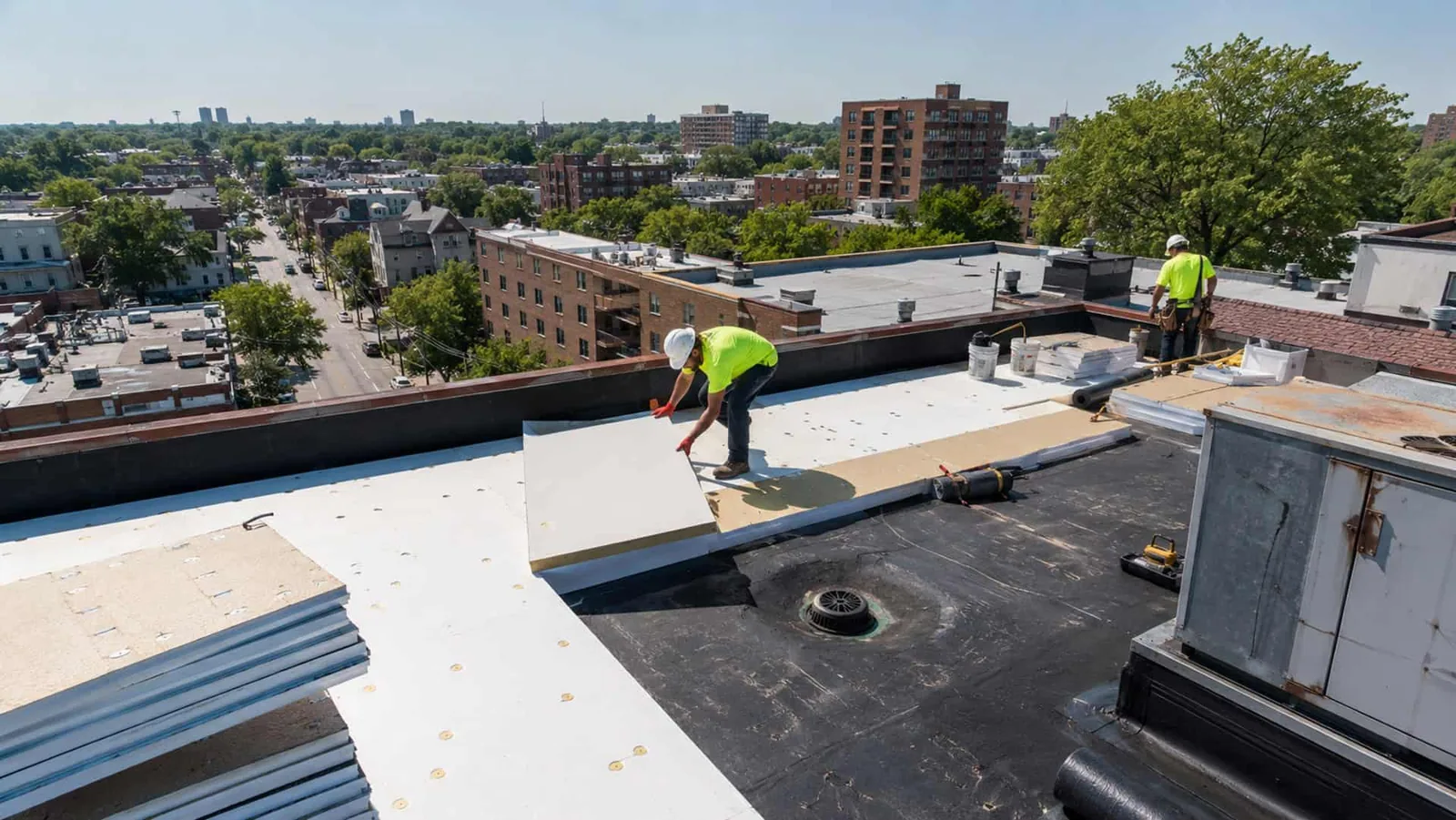
A blocked drain before a freeze can leave water in the same low area that is difficult to reach after snow settles. In Springfield, our maintenance visit starts with the roof section, the water path, and the next access window. We record what is open, what is wet, and what can wait, then give the owner a practical order of work. Around Indian Orchard Business Park, several property uses share an established business area; along the State Street corridor, occupied storefronts and institutions can affect roof access. A schedule should fit the building, not a calendar alone.
Set a useful baseline
We begin by reviewing the roof plan, available repair records, leak reports, and the routes used by staff or other trades. On the roof, we divide the assembly into identifiable sections and note membrane type, edge conditions, penetrations, drains, and prior patches. The purpose is to create a baseline that can be compared with the next visit. A photo marked by roof area is more useful than an image with no location, particularly when several additions or elevations have different assemblies.
Springfield’s 3.2-mile State Street connector includes business and institutional frontage, while the City describes Metro Center as a mix of offices, retail, public, and educational buildings. Those uses make scheduling and entry routes important scope details. We coordinate the inspection path with the property contact and record any limits. A roof condition report can hold the observations, photographs, and follow-up items in one record for the next decision.
Keep water moving
Drainage checks cover bowls, strainers, scuppers, overflow routes, crickets, and low areas where insulation may have compressed. We clear ordinary debris when it is safe and within the agreed work scope, then check whether water can reach the outlet without crossing a raised seam or blocked path. Ponding deserves a closer look when it remains after nearby areas dry, when the deck or insulation has changed shape, or when a drain assembly sits below a local depression.
Massachusetts resilience planning identifies snow and ice weight as a source of roof and structural damage during severe winter storms. Before cold weather, we pay attention to outlets, edge discharge, and areas where thaw water could refreeze. During spring service, the same locations help show whether a prior blockage or repair changed the flow. A drain and scupper correction may be needed if cleaning does not correct the path. We photograph the condition and separate maintenance from construction work that needs a design or permit review.
Inspect the details
At seams, laps, penetrations, curbs, walls, and perimeter metal, we look for movement, open edges, split flashing, failed sealant, and material that no longer bonds to its substrate. The check follows the assembly. A TPO weld needs a different test from an EPDM seam, and metal panel fasteners call for a different review than a membrane termination. We avoid adding a patch until the surface is dry and prepared and the source of movement is understood.
Springfield’s Building Division enforces the state code and permit conditions, reviews plans, and inspects alterations and repairs. When maintenance uncovers work that could change an assembly, we identify the condition for the owner and note where plan review may enter the schedule. The scope can distinguish a minor adjustment from a repair requiring a compatible membrane or metal component. We can include edge metal and gutter checks with the visit and track any open perimeter item separately from surface wear.
Separate routine work
A maintenance list should not make every observation sound urgent. We mark active water entry, loose or unsafe conditions, drainage concerns, and small upkeep items in separate groups. Each item includes its location, the evidence seen, and the next step. If a seam is open but the surrounding sheet remains sound, the repair scope can stay localized. If wet insulation or repeated failures extend across an area, we identify what testing would clarify before proposing broader work.
The 2011 Springfield tornado crossed the Connecticut River at the Memorial Avenue Bridge and caused damage on the city’s south side downtown. That documented event is why edge and flashing conditions get inspected after a severe wind report, and we record what the roof shows. A wind damage repair review can distinguish displacement from ordinary wear, and a hands-on inspection can investigate a recurring condition that routine cleaning cannot resolve.
Fit the visit to operations
Maintenance frequency depends on the assembly, exposure, repair history, rooftop equipment, and consequences of a missed defect. We can establish seasonal visits, add a check after major weather, or coordinate service with planned mechanical work. The owner receives a defined route and scope so the crew is not moving through occupied areas without notice. If a lift or restricted access is needed, those arrangements are identified before the visit.
We also note the conditions that can change timing: wet surfaces, snow cover, low temperatures, material cure limits, or other trades using the same roof. A written schedule can identify a temporary item and the next suitable weather window for permanent work. For more than one building, multi-building roof scheduling keeps sections and priorities distinct. The closeout lists completed maintenance, deferred repairs, photographs, and the event or condition that should trigger another review.
A useful interval is set from observed change rather than copied from another property. A roof with clear drainage and stable seams may need a different cadence from a section with recurring ponding or recent mechanical penetrations. We note the reason for each planned visit, then compare new photographs with the baseline. If a detail remains unchanged, the record shows that; if movement, moisture, or a new patch appears, the owner can see where the maintenance scope should shift.
Seasonal planning also leaves room for work that cannot be done safely in every condition. We can clear and inspect accessible outlets before winter, then return after thaw to check areas where ice or snow limited the earlier view. A major storm, new rooftop unit, or interior leak can bring a focused visit forward. The schedule identifies these triggers so staff know when to call, what roof area to identify, and which access contact should be available. Each visit ends with a dated note, so a pattern in drains, seams, or flashings shows up over successive seasons.
Commercial Roofing Questions
Which items belong on a routine roof visit?
We check drains, overflow paths, seams, penetrations, flashings, edges, prior repairs, and accessible roof surfaces. The list is matched to the assembly and the conditions recorded at the building.
Can the visit include small repairs?
Yes, when the defect, material, access, and weather fit the approved scope. We record each completed item and list conditions that need separate testing or a larger proposal.
What changes the maintenance schedule?
Roof system, drainage performance, past leaks, rooftop trade activity, and exposure all matter. A repair history or change in leak pattern can justify a focused check before the next planned visit.
How do you report a condition that is not ready for repair?
We identify its location, explain what limits the work, and state the next action or weather window. Temporary protection is labeled separately from completed permanent work.
Will maintenance tell us when replacement is due?
It can show how defects are changing and whether repairs remain localized. When broader testing or replacement planning is justified, we explain the evidence and the unresolved questions.