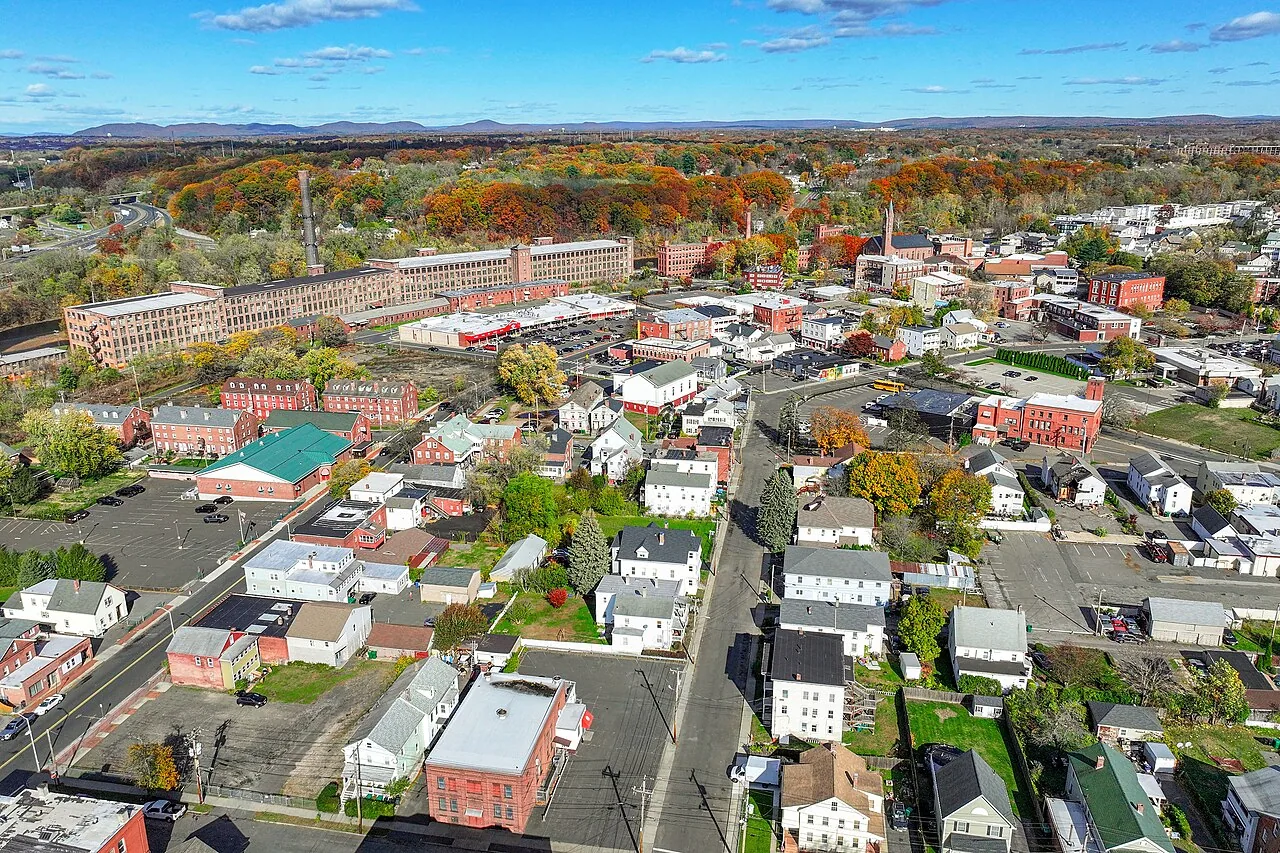
East Springfield is a place where a roof owner may need to know which side of a line the building sits on. The city's neighborhood profile puts it in Springfield's northern tier, beginning about two and a half miles east of Metro Center and covering 1,504 acres, bounded in part by Chicopee, a Boston and Albany rail line, St. James Avenue and stretches of Brookdale Drive, Page Boulevard and Worcester Street. Roof permits, zoning checks and occupancy rules differ between cities, so the first step on a Springfield, MA call is to confirm the jurisdiction and the use. Then we walk the roof, rank what we find and write a scope that matches both the building and the rules that govern it. The first deliverable is a sketch of the roof on which each defect is numbered, photographed and put in order of consequence.
Confirm the jurisdiction before pricing the permit
On the Springfield side, plan review and inspection of alterations and repairs belong to the city's Building Division. Chicopee, next door, requires businesses to obtain a Certificate of Occupancy Zoning confirming that a use complies with its zoning. A tenant who moves from one side of the line to the other, or an owner with buildings on both, meets two processes, and the roof contractor is often the first person to notice.
We ask for the address and the parcel record early, confirm which office reviews the work and prepare the roof plan, product data and detail sheets that office needs, along with the fastening pattern, insulation values and flashing heights. If a project crosses the line, such as a portfolio with buildings in Chicopee and East Springfield, we keep one roof record and two permit packages. That avoids the delay of discovering a missing document after the material has been ordered.
Timing across the line differs as well. A permit that takes days in one office can take longer in another, and a tenant who needs a certificate before opening may be waiting on the roof permit. We ask for the opening date or lease date early and work backward from it, so the roof schedule is built on the real constraint, not on the date the proposal was signed.
Plan around school routes and bus hours
The profile identifies Bowles and Mary Pottenger elementary schools within East Springfield. We ask each property manager whether a school route, bus stop or crossing lies near the work zone, and if so we hold lift moves and deliveries away from arrival and dismissal, post a spotter and keep walkways clear.
Noise follows the same logic. Loud tasks run mid-day, idling is limited and neighbors get a notice with the days, hours and a phone contact. Debris goes down a chute into covered containers. Those habits cost little and prevent the calls that interrupt a job.
The same attention applies to parking and access. A crew that fills a street with trucks irritates neighbors, so we agree on where vehicles stand, where the lift sits and where material is staged, and we confirm the plan with the property manager the day before mobilization. If a school event or a road closure changes the plan, we adjust the day rather than push through.
Treat rail and truck edges as wear zones
Wherever a roof sits near a rail line or a busy street, we look for the wear that comes with it. Dust clogs drains, vibration loosens fasteners and sealants, and exhaust can stain and soften certain membranes, so the exposed side of a roof often ages faster than the sheltered side. East Springfield has a rail line on one boundary, so we ask each owner what runs nearby and look at drains, laps and flashing on the exposed side first, comparing the sheet there with the sheet on the far side.
Where a building has a loading area, we inspect the canopy and the wall above each door, since a cap that lets water behind it is a common source of dock-side stains. An warehouse roof or a flex industrial roof is walked with these zones marked on the plan, and the maintenance schedule puts extra drain checks where dust and debris collect. Preventive visits before freeze and after the thaw catch the open laps and clogged outlets that lead to spring leak calls.
Check drains, edges and snow behavior
The state rates severe winter storms a high-likelihood hazard and lists snow and ice load as a way they damage roofs. In East Springfield, as elsewhere, we check drains before freeze, look for drift zones against walls and equipment and clear outlets that ice can block. Infrared scanning in spring, through an infrared moisture survey, shows where winter left wet insulation.
Springfield also has a wind record. On June 1, 2011, the Weather Service documented an EF3 tornado crossing the city and removing roofs from some large commercial brick buildings. We check perimeter metal, parapet caps and rooftop equipment on every visit. After strong wind, wind damage roof repair begins at the edges and works inward.
Choose the scope and keep one record
Roofs near a city line need the same discipline as any other: a few leaks over dry insulation point to repair. A sound base under a worn sheet may take a roof recover overlay. Wet insulation over several areas means removal in those areas. Our proposals show cost drivers openly: the amount of wet material, the number of penetrations, the access, the hours and the weather window.
The wet-material line deserves a word. A moisture meter and a handful of cores can show that water is limited to a few square feet near a drain, or spread across a bay. The first is a cut-out and a patch. The second changes the job. We bring the numbers to the owner with a map, so the choice between repair and replacement is made from the roof, not from a guess about how bad it might be.
The turnover file lists the system, drains, curbs, repairs and photographs, and it holds the permit documents for the right jurisdiction. Owners with buildings in the nearby Boston Road commercial area or along the Roosevelt Avenue corridor can add them to the same record. Each visit adds a dated entry with the parcel and the roof section, so the file shows which jurisdiction reviewed which piece of work.
Commercial Roofing Questions
How large is East Springfield?
The city profile gives it 1,504 acres in the northern tier, beginning about two and a half miles east of Metro Center.
Which permit office reviews the roof?
It depends on which side of the city line the parcel sits. Springfield's Building Division handles Springfield parcels, and Chicopee has its own zoning and occupancy process. We confirm before pricing, so the permit step does not surprise anyone.
Do you avoid school hours?
When a school route or stop is near the work zone, yes. Deliveries and lift moves stay out of arrival and dismissal windows, and a spotter watches the crossing during them.
Why check drains more often near trucks and rail?
Dust and debris collect and clog drains, and vibration loosens details such as fasteners and sealant. We add extra checks in those zones and record what we find so the pattern is visible from visit to visit.
What records come with the work?
A roof plan, photographs, system details, repairs and permit documents, kept in one file you can hand to a buyer or lender, with dated entries for each visit and each repair.