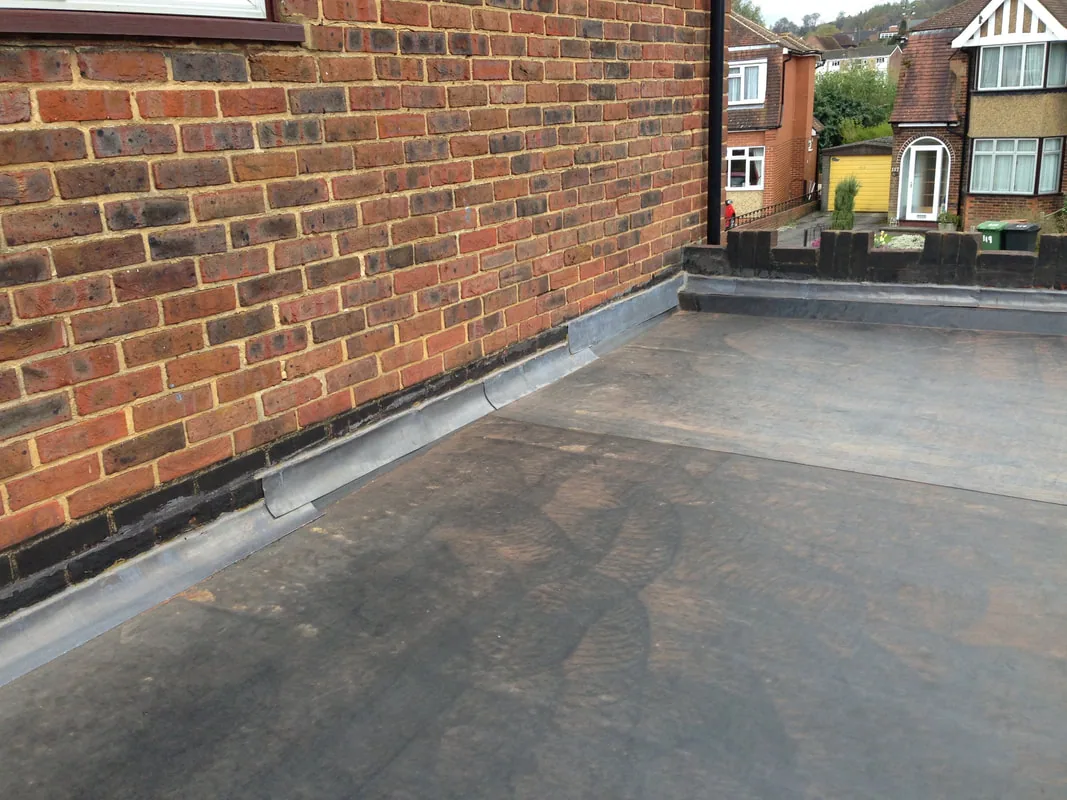
A small cut in a membrane can admit water long before a ceiling stain appears. The repair has to account for what made the opening, how far moisture traveled, and whether the surrounding sheet can hold a patch. Springfield’s 2011 EF3 tornado damaged commercial brick structures and removed some roofs; severe winter storms can also strain Massachusetts roof assemblies under snow and ice weight. Those conditions can compound an unnoticed puncture. We map the opening and nearby foot path, check the substrate, and set a repair boundary that reaches stable material. At Indian Orchard Business Park or along the Roosevelt Avenue corridor, a work route may cross active industrial operations. We confirm access before moving tools or material across the roof.
Find the opening and its path
We examine the membrane for a cut, puncture, abrasion, displaced patch, or damage around a fastener. Nearby seams and flashing are checked because a visible hole may not be the only entry point. We note whether the sheet has stretched, whether reinforcement is exposed, and whether the surface is contaminated by grease, metal filings, or equipment work. The field record includes the puncture’s location, dimensions, and relationship to curbs, walk pads, and service routes.
Interior leakage can lag behind the roof event. We compare the stain timing with the weather, roof slope, and likely direction along insulation or deck flutes. If water may be concealed, a moisture survey can guide test locations, followed by an opening where needed to confirm the assembly. A roof inspection also checks the surrounding section so the repair does not stop at the first visible tear.
A puncture near a mechanical unit may have followed maintenance access, but we do not infer cause from location alone. The site contact can identify recent work and known access paths. Springfield’s Medical District had roughly 315 medical and health-service establishments and nearly 10,000 workers in the 2011 count. We plan the roof route with the building contact and keep interior areas protected while the assembly is open.
Check the material below
After marking the opening, we remove loose or damaged membrane only as far as needed to inspect the bond and substrate. Wet insulation is mapped separately from dry material. If the deck is soft, corroded, or displaced, the repair must include that condition or leave it clearly identified for a separate scope. The replacement patch should use a compatible membrane and a prepared surface, with corners and edges reinforced according to the system.
Foot traffic can wear a path between roof access and equipment. We inspect nearby walk pads, ladders, and service locations for repeated abrasion. Where maintenance traffic is expected, a compatible walkway can protect the field sheet, but it should not cover a wet or poorly bonded area. If the opening is close to an edge, a wind-damage inspection checks the attachment and perimeter as well. A separate seam repair review addresses laps that have opened beside the puncture.
Patch to sound limits
The repair method follows the membrane and the condition of the exposed surface. A thermoplastic system may need cleaning and a welded patch; an EPDM assembly uses compatible seam materials and a different preparation. Modified bitumen and built-up roofs require their own tie-in details. We verify the existing system before selecting material, then form a patch large enough to reach sound membrane around the damage. A surface smear that leaves an unbonded edge is not a finished repair.
If the puncture sits over wet insulation, we remove the affected material to a suitable boundary, restore the assembly, and secure the membrane tie-in. Insulation repair may be part of the scope. When damage reaches several areas or the roof has widespread deterioration, we compare localized work with a larger repair program or replacement. The scope names the confirmed opening, added work, and any test that could change the quantity.
Alterations in Springfield may require permit review and inspection. We coordinate roof-scope information with the owner’s project team before work starts. That review is separate from verifying whether the exposed insulation is dry and the deck is sound.
Keep the work zone controlled
Roof access determines how the crew can reach the puncture without creating new damage. We confirm hatch condition, fall protection, lift route, tool staging, and any mechanical areas that need clearance. If work continues while the building is occupied, we protect the space below and keep removed material out of active routes. The roof area is opened in a manageable section, then secured at the end of the work window.
East Springfield’s boundaries include the Boston & Albany rail line and St. James Avenue. Near that neighborhood, the facility contact confirms delivery access and equipment paths before work begins. The roof plan notes the puncture and the walk route, while daily closeout states what remains covered or open. This is useful on industrial sites where equipment service can share the roof path with repair work.
A phased work plan can help a facility keep operations moving while the damaged section is repaired. We agree on the work boundary, noise window, and interior protection before removing membrane. If weather changes the safe work period, a temporary cover is installed and its limits are recorded for the return visit.
Record what changed
Photographs show the puncture before work, the exposed layers, and the completed patch. We document the material installed, repair limits, and any moisture or deck condition found during the opening. If the source of the damage is uncertain, the report records the observed evidence without assigning it to a tenant or trade. The facilities team can then compare a later leak with the same roof location.
Timing and cost depend on access, membrane type, insulation depth, interior protection, and whether the deck needs additional work. A single patch may fit a short weather window. A repair that includes wet insulation or equipment coordination takes longer. We separate those drivers and identify open questions before setting the final work plan. Condition documentation can be combined with a maintenance visit that checks walk paths and drains during planned roof access.
Check the nearby route
After the repair, we inspect the patch perimeter, verify its bond, and clear debris from the work area. If a walkway is installed, we confirm that it protects the service route without blocking drainage. The closeout names any condition that still requires a test, access arrangement, or separate repair.
Waiting can allow water to travel into insulation or interior finishes, particularly after repeated rain or snowmelt. A prompt inspection can define the opening and protect the affected section. If the roof is unsafe to access, the site contact can isolate the interior area and share leak timing so we can plan the visit. The next step follows the assembly found, not the apparent size of the hole.
Commercial Roofing Questions
Can a small puncture affect a large roof area?
It can if water travels through insulation or along the deck before reaching the interior. We map the opening, compare the leak pattern, and test concealed areas when that would change the repair.
Do footpaths need walkway pads?
Where recurring maintenance traffic crosses the membrane, a compatible walkway can reduce abrasion. We first confirm the existing sheet is dry and bonded so the pad does not conceal damage.
How is a membrane patch selected?
The existing system, surface condition, and attachment set the method. We identify the membrane and prepare the surrounding material before welding, bonding, or installing the appropriate tie-in.
Will you replace insulation around the puncture?
Only where the assembly shows moisture or loss of support. We map wet material, remove it to a suitable boundary, and record what remains for any later testing.
What if the puncture is close to equipment?
We confirm service access and protect the unit before staging tools. The repair route is coordinated with the facility contact so the crew can work without blocking needed maintenance access.