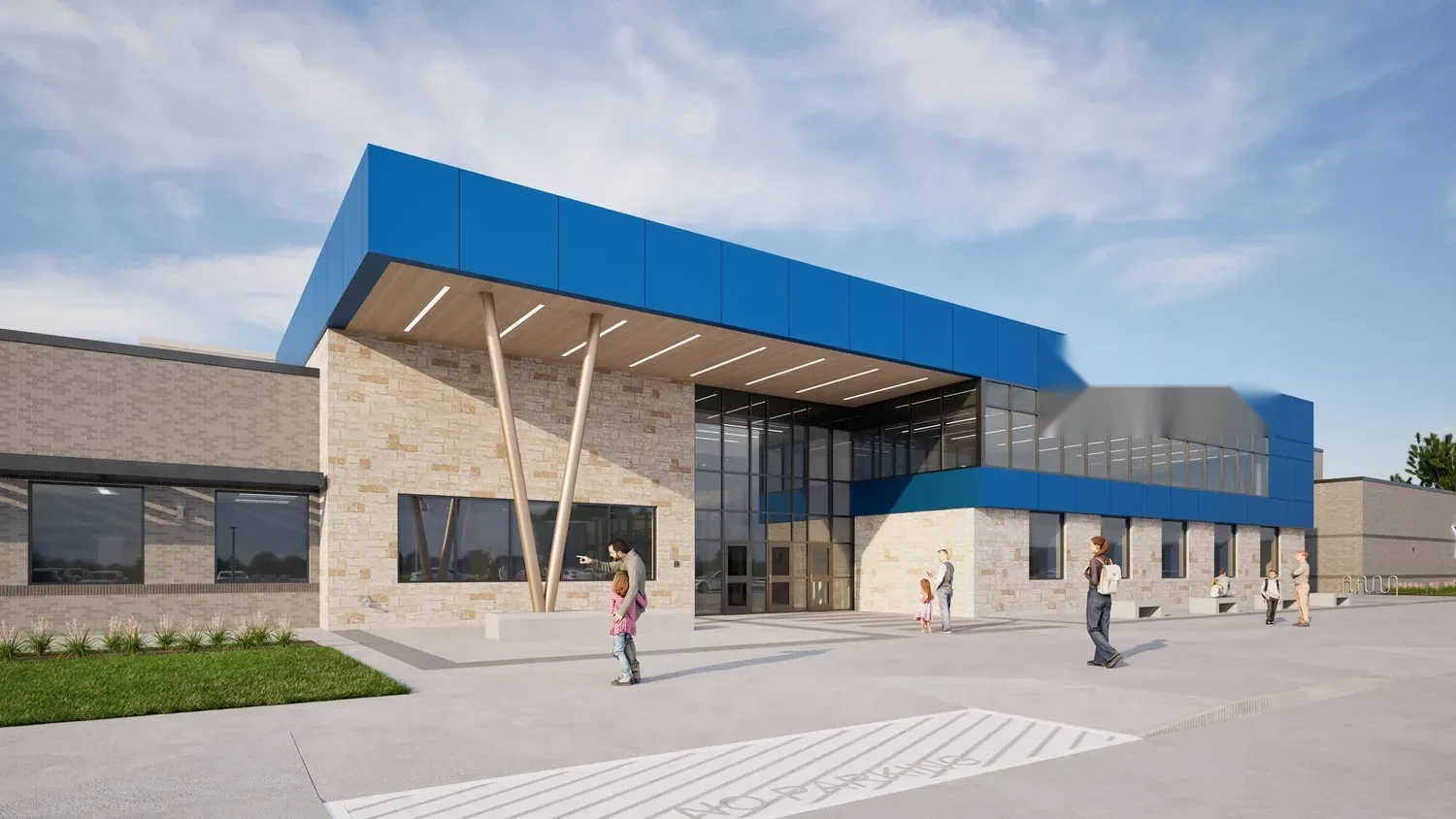
A dealership has three roofs under one name: the showroom, the service shop and the canopy over the delivery lane, and each fails differently. Dealership roofs in Springfield, MA stand in the same commercial settings as other retail: corridors such as State Street, which runs 3.2 miles with business frontage, and the arterial roads that tie into I-91 and I-291. The showroom carries glass, a parapet and rooftop signs. The service shop carries exhaust and make-up air. The canopy sheds water onto a lane where customers walk. We begin with the area where a leak would cost the most, usually the showroom floor with vehicles on it, and work outward.
The showroom roof protects inventory and image
A drip on a new vehicle, or a stain on a showroom ceiling, undercuts the sale. Showroom roofs are often low-slope with tall parapets and a curtain wall below, and the junction between wall and roof is the weak point. We check the through-wall flashing, the parapet cap, the sealant at the glazing head and the drains close to the wall.
Skylights and clerestories add more detail. Where a unit has leaked more than once, replacing the flashing and the curb is better than another bead of sealant. Skylight and penetration flashing repairs are scheduled for hours when the showroom is quiet, and temporary protection goes over vehicles before work starts.
Drains near the wall deserve extra attention. A showroom roof that ponds beside the glazing wall loads the flashing with standing water, and a small defect there becomes a stain on the new-car floor. We clear the drains, check slope and propose a corrected outlet where the water lingers.
Service bays carry exhaust, fumes and heavy equipment
The service building often has the most roof penetrations: exhaust fans, make-up air units, vehicle exhaust drops and shop heaters. Fumes and oils can reach the membrane around them. We check the roof near each discharge for staining or softening and test flashings at the curbs.
Work above a working shop is scheduled around technicians' shifts, with protection over lifts and open vehicles. Dust control matters near paint or detail areas, and fresh-air intakes near the work zone are covered. If a membrane near an exhaust is breaking down, a more resistant patch material may be proposed for that zone, and the rest of the roof stays as is.
A body shop or detail bay in the same building has its own exhaust and heat sources. We check that spray-booth exhaust and heater flues clear the roof surface and that their flashing is intact. Heat and chemicals shorten the life of some membranes, and we report on the condition of the surface near each discharge.
Canopies and drive-through lanes need edge and drainage work
A service-lane canopy collects rain and snow and discharges at the edge. If its gutter or drip edge fails, water falls where customers and staff walk, and in winter it freezes. We check the canopy's flashing at the building wall, the gutter, the downspout and the edge metal.
Snow and ice load on roofs is a listed impact of the severe winter storms that the state's hazard analysis rates a high-likelihood hazard, and that matters for a wide, lightly framed canopy. We look for sag, loose connections and fastener corrosion, and we bring in an engineer if the structure has moved. Work on edge metal and gutters is scheduled with the lane closed.
Where a canopy sits against the main building, the joint between them collects snow and meltwater. We reflash the joint with a continuous counterflashing and fasten the canopy so it moves independently of the wall.
Work around sales hours and delivery trucks
Dealerships trade six or seven days a week, and delivery trucks arrive on their own schedule. Hoists and staging avoid customer entrances and the lot's front rows. Noisy tasks over the showroom are scheduled for early mornings or the slowest days.
Inventory is the other concern. Vehicles stored outside, near the building, can be hit by falling debris or fasteners, so we ask the manager to move them out of the drop zone. The work zone is fenced, and a spotter watches for wind that could carry material. At the end of each shift, we sweep the lot and the roof and check for stray fasteners.
Test drives and customer parking use the same lot as our staging. We agree on a boundary with the manager, mark it with cones and move equipment out of the lane during peak hours.
Check signs and edges against the storm record
The June 1, 2011 EF3 tornado crossed Springfield, hit the south side of downtown hard and, per the Weather Service, took roofs off some large commercial brick buildings. A dealership will have rooftop signs, tall parapets and light canopies that catch wind.
We check sign brackets, parapet caps and edge fastening. Loose items are secured at once. Wind damage roof repair after a storm begins with a photograph of every area and temporary protection over the showroom, then moves to the permanent scope.
Dealers in a retail strip share a roof with neighbors, much like a shopping center roof, and perimeter work is coordinated with the landlord so the edge is secure along the whole building and not just the dealer's bay.
Plan the roof around the brand's refresh cycle
Manufacturers ask dealers to renovate on a cycle, and a roof replaced just before a facade refresh is a wasted dollar. We ask for the renovation calendar and set the roof work in front of it or inside it. A roof capital plan shows the three roofs side by side with their remaining life.
Owners with other buildings, such as a flex-industrial roof, can use the same format, and dealerships on the State Street Corridor or the Roosevelt Avenue corridor are judged on their own findings.
Because dealer groups own several rooftops, the plan can rank them by risk. A showroom with high-value inventory and a leak history goes ahead of a service building with a sound roof, even if the second is older.
Commercial Roofing Questions
How do you protect new vehicles during roof work?
We cover vehicles under open sections, ask the manager to move inventory out of the drop zone and keep a spotter on the lot. Temporary ceiling protection goes in before work above the showroom, and it stays until the section is closed.
Why does the showroom wall leak when the roof looks fine?
Often the flashing at the parapet or the glazing head has failed. Water enters at the wall and shows up inside near the glass. We test the flashing and the sealant, and we check the drains close to the wall.
Can the service shop stay open during a reroof?
Usually yes, with protection over lifts and open vehicles and noisy tasks scheduled around shifts. Fumes and dust are controlled at the intakes, and the shop foreman approves the plan for each section.
What goes wrong with a canopy in winter?
Snow load and ice stress the frame and connections, and a failed gutter drops meltwater onto the lane. We check the structure, the gutter and the flashing before winter, and bring in an engineer if the frame has moved.
When should the roof be replaced relative to a renovation?
Before it or with it, never just before a facade project that would remove access. We coordinate with the renovation calendar and set the roof work to avoid scaffold conflicts and repeated openings.