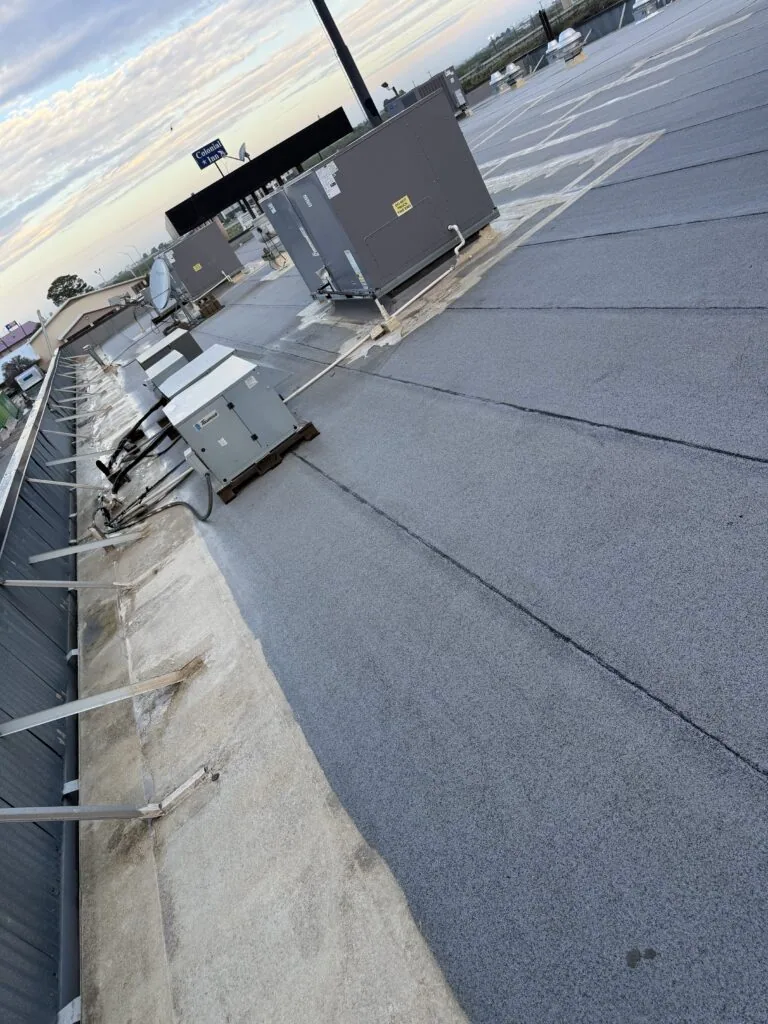
A leak that appears during thaw can follow a different path than water from a summer storm. Severe winter storms are a high-likelihood hazard in Massachusetts, where snow and ice weight can damage roofs and structures. The repair visit checks both the visible leak and the drainage conditions that develop as snow melts. We confirm safe roof access, mark the affected section, and look at drains, seams, edges, and interior reports before opening the assembly. A building near Forest Park or Indian Orchard gets a building-specific check of its roof load and condition. We keep the first scope focused on what can be safely observed and what requires additional testing.
Confirm access after winter weather
Snow-covered roofs, ice, and wet surfaces can hide openings and make access unsafe. We check the hatch or ladder route, fall protection, visible drift patterns, and any area the facility contact has restricted. If the deck, parapet, or framing shows movement, we stop at a safe boundary and request the appropriate structural review. Roofing repair does not begin by crossing an uncertain section to reach a leak.
Once access is cleared, we locate the interior report and compare it with the roof plan. Thaw water can enter at a seam, wall, curb, or drain and travel before reaching the ceiling. We record when the leak starts, whether it follows daytime warming, and which rooms are affected. A leak investigation follows that timing, while a drain inspection checks whether meltwater can reach the outlet.
State Street links East Columbus Avenue with Berkshire Avenue and has business and institutional frontage. After snowfall, we confirm roof access and lift approach with the property team before moving equipment. A roof inspection should record the actual assembly rather than rely on a building’s age or appearance. We document the roof section and existing repairs before selecting any snow-related work.
Trace meltwater and ice
We inspect strainers, drain bowls, scuppers, leaders, and the membrane around each outlet. Debris, a frozen drain, or a raised edge can hold meltwater against seams and penetrations. The Diligence Notes show where the water sits and how it reaches the outlet after the obstruction is cleared. If the roof has a low area, we measure the footprint and check for compressed insulation or a changed deck profile.
Ice at an edge can also point to drainage and heat-loss conditions, but the cause must be established at the property. We look at the roof termination, wall transition, insulation, and interior pattern. A ponding-water repair review addresses persistent low areas; a seam inspection checks whether repeated wetting has separated a lap.
Separate roof distress from a leak
We note sagging, unusual deflection, crushed insulation, displaced metal, open joints, and changes around supports. Those signs may require a structural professional before roofing work proceeds. A ceiling stain alone cannot show whether the deck or framing is affected. We keep roofing observations and structural decisions distinct, documenting the section and the review needed to continue safely.
Snow weight can affect roof and structural components, while ice can block an outlet or hold water at a detail. We use that context to check drainage and visible movement, then let site observations guide testing. If insulation is wet, we mark the area and determine whether an opening is needed to establish the repair boundary.
At a building near the Connecticut River or along I-91 and I-291, the local route may affect access and material staging, not the load calculation. We confirm where equipment can be placed and leave structural assessment to the qualified design professional. A condition inspection can document the roof section and coordinate findings for the owner’s project team.
Restore the water path
Where a drain is blocked, we clear it and check the bowl, strainer, and surrounding membrane termination. A split seam or damaged flashing is repaired with materials compatible with the existing system. If insulation is wet or compressed, we remove it to a sound boundary, restore the roof layers, and verify the tie-in. A patch that simply covers ice damage can trap water or leave the original drainage problem in place.
Springfield alteration work may require a permit and inspection; we coordinate the roof scope with the owner’s project team when review applies. For repeated failures across several sections, we compare targeted repairs with a broader replacement scope. The decision depends on the existing system, deck condition, moisture extent, and drainage corrections required, not on the season alone.
A cover-board and insulation repair may be needed where the assembly has lost support. We list removal, drying or replacement, access, and interior protection as separate cost drivers. Each completed section is inspected before the next area is opened.
Protect occupied areas
Before opening the roof, we confirm which rooms, mechanical areas, and delivery routes need protection. A winter repair may need a shorter weather window, so we define the section that can be opened, secured, and checked during that period. The site contact receives the access plan, temporary limits, and expected return condition. If the weather closes the roof, the crew protects the tie-in and records what remains unfinished.
Roof access in Forest Park and Indian Orchard is property-specific. We coordinate a lift or material route with the building contact and keep the work area separate from active entrances. An occupied-building sequence can phase the roof work while tenants remain in service where safe. Daily closeout notes the section protected and any interior condition that needs follow-up.
For multiple properties, a roof program can schedule separate inspections and repairs, while each building keeps its own findings.
Record thaw checks
After repair, we confirm water can reach the outlet, inspect the membrane tie-in, and clear debris from the work zone. The closeout includes photos, roof location, materials, and any structural or moisture item left open. If a follow-up is needed after snowmelt, we name the section and the condition to watch rather than leaving a general reminder.
Timing and cost depend on safe access, snow or ice conditions, drainage, material availability, wet insulation, and whether the deck needs review. A condition report can preserve the inspection baseline, and maintenance can check drains and transitions before the next winter cycle. That work is most useful when it follows the property’s roof map and prior repair records.
Send the leak timeline, roof access instructions, and affected interior rooms with the service request. Those details help us plan the first visit and avoid an unsafe approach to a snow-covered section.
Commercial Roofing Questions
Is it safe to inspect a roof with snow on it?
Access depends on surface conditions, fall protection, roof structure, and the route available. We confirm the area is safe before walking it and stop where a structural review is needed.
Could a thaw leak come from a drain?
Yes, but the leak may also enter at a seam, curb, or wall transition. We compare the timing and interior location with the roof plan and test the most likely water path.
Does snow on the roof mean the structure is overloaded?
Snow cover alone cannot show the load or the roof’s capacity. Visible movement or distress requires the appropriate structural review before repair work continues.
Can a drain problem be repaired without replacing the roof?
A blocked outlet or isolated membrane detail may be corrected locally. We inspect nearby insulation and seams to determine whether water has affected a wider section.
What should be checked after snowmelt?
We review drains, scuppers, seams, edges, and the interior leak pattern. The record identifies any area that needs a test or another look after the roof dries.