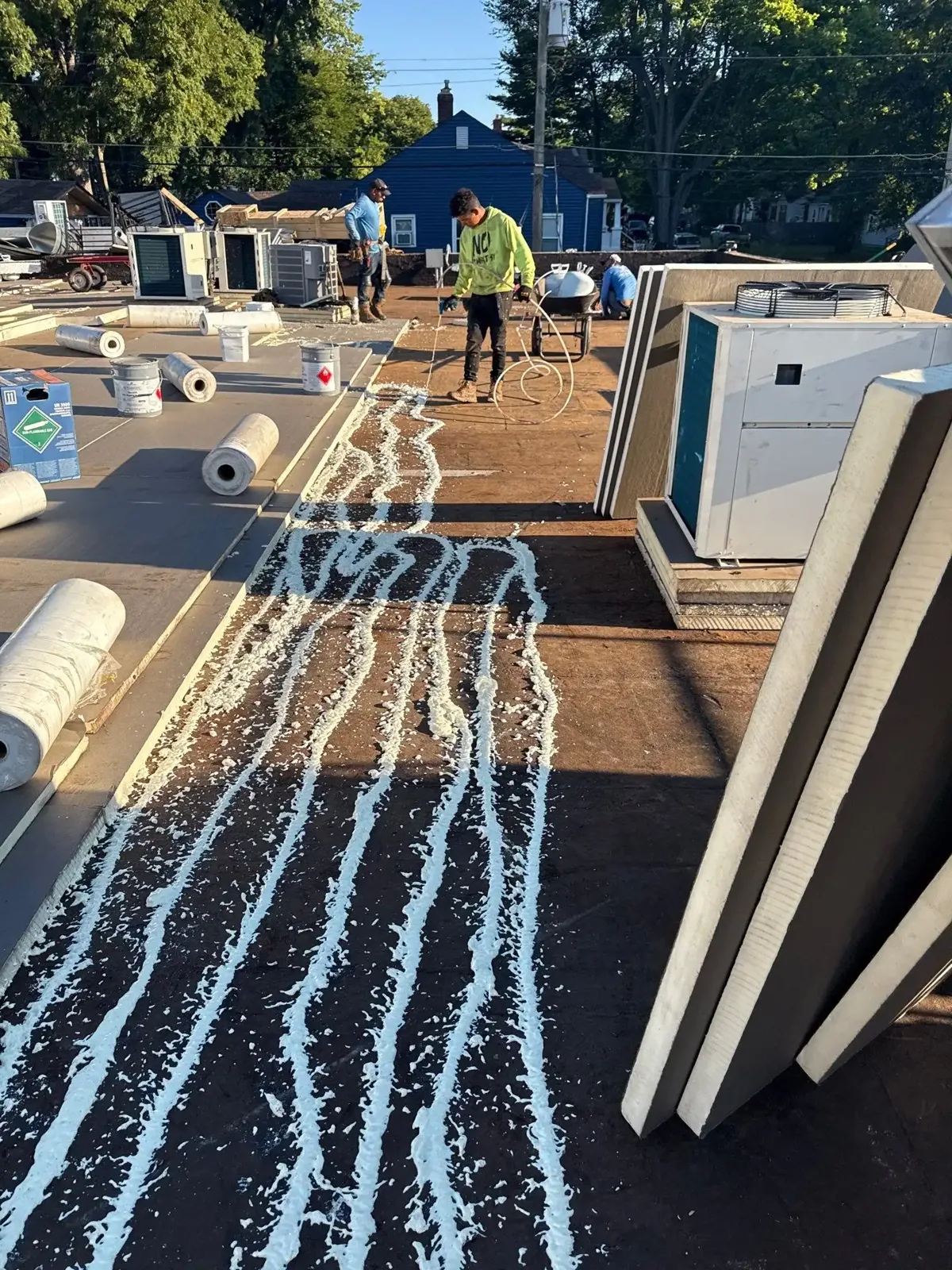
After a wind event, a lifted edge can expose more roof area than the first visible opening suggests. In Springfield, we separate immediate water control from the permanent repair, then inspect the affected section and its neighboring details. The 2011 tornado crossed the Connecticut River near the Memorial Avenue Bridge and damaged commercial structures on the south side downtown; current work still depends on what the roof shows today. Along the South End or near Metro Center, access and staging may shape the first visit. We document both the damage and the limits of the inspection.
Make the area safe
We first identify active water, loose material, exposed openings, and any hazard to people below. The building contact helps isolate rooms, equipment, or entry routes that need protection. From safe access, we determine whether a temporary cover, controlled diversion, or other short-term measure is appropriate. Temporary protection must remain secure, preserve drainage, and be labeled as an interim step. If roof access is unsafe, we coordinate another way to assess visible conditions before anyone enters the work zone.
The National Weather Service documented roof removals and damage to large commercial brick structures during the Springfield tornado. That record is why perimeter metal, wall transitions, and attachment get checked first after high wind. We photograph any displacement and mark the roof area. Our emergency roof response can address urgent exposure while the permanent scope is assembled. We keep the immediate protection distinct from any later replacement or claim decision.
Map the affected section
A storm review follows the failure path outward. We check membrane seams, edge metal, coping, penetrations, equipment curbs, drains, wall flashings, and debris impact. A lifted lap can admit water beyond its visible end; a dent in metal may be cosmetic or may have opened a seam. We note what is confirmed, what needs a closer test, and which areas could not be reached. A marked roof plan and photographs allow the owner to match observations with interior reports.
Springfield’s Building Division reviews plans, enforces state code and permit conditions, and inspects applicable construction and repairs. If damage has exposed insulation or deck, we record the layers that need review before covering them. A hands-on roof inspection can assess seams and attachment, while drain and scupper checks help determine whether debris or deformation changed the water path. We keep findings separated by roof section so one damaged detail does not imply a building-wide failure.
Trace moisture and drainage
Rain may continue moving through insulation after the surface opening is closed. We inspect below the suspected entry point where interior access is allowed, note ceiling or wall conditions, and compare those observations with seams and penetrations above. A test cut may be proposed when the assembly hides moisture or the extent affects the repair boundary. We state what the test will answer and how its location will be restored.
Massachusetts’ ResilientMass plan names snow and ice weight as a cause of roof and structural damage in severe winter storms. A storm-related inspection in Springfield also checks outlets, overflow paths, and low areas where water could remain after a thaw. If wet insulation is present, we identify whether removal is local or broader and keep that work out of a surface-only patch. A ponding-water review can address a drainage condition that is separate from wind damage.
Build the permanent scope
The permanent repair depends on the roof system and the extent of movement. We prepare sound material, remove loose or wet components when approved, and install compatible membrane, flashing, or metal repairs. Edge work must secure the termination without trapping water; a penetration repair must connect correctly with the field membrane. If the same condition repeats across a section, we compare an isolated fix with a larger assembly repair and show the evidence behind that decision.
Severe winter conditions are identified by the state as a high-likelihood hazard, and snow or ice can delay work or change access. We plan around safe surfaces, cure requirements, and weather protection. The scope lists materials, repair limits, temporary measures, and any open investigation. When the affected area cannot be repaired within a small boundary, a replacement assessment or insurance documentation support may help the owner compare next steps without treating a storm report as a coverage determination.
Sequence work around the building
Repairs above active space require a defined route, work zone, and protection plan. We coordinate roof access, lifts, deliveries, and any interior protection with the facility contact. I-91 and I-291 cross or frame commercial parts of Springfield, and street-side staging can differ between a downtown property and an industrial area. We confirm the site conditions instead of assuming a route from a map. The work plan identifies which roof section is active and when it can be returned to service.
If materials cannot be installed before the next weather window, the closeout explains the temporary measure and return trigger. We also note trades that need to replace rooftop equipment, repair a wall, or restore a damaged ceiling before the roof work is considered complete. Daily photographs show what was opened, protected, repaired, and left for follow-up. This record helps distinguish storm damage from a pre-existing condition or later trade work.
When several roof areas are involved, we sequence them so each opening can be closed and inspected before the crew moves to the next one. The site contact receives the daily work limit, anticipated noise or lift activity, and any access restriction that remains. If weather shifts the sequence, the closeout records which area received protection and what must be checked before work resumes. That detail makes the next shift safer and keeps an urgent repair from becoming an unclear handoff.
Keep a repair record
A useful closeout lists the storm date reported by the owner, inspection date, roof sections reached, visible conditions, test areas, materials, and repair boundaries. We attach images and identify items that remain uncertain. If the owner is coordinating with an insurer or adjuster, our documentation describes roofing observations and completed work; it does not decide policy coverage. The report can be updated if later testing reveals concealed damage.
We set a follow-up around a specific condition, such as recurring leakage, movement at a repaired edge, or the next major weather event. For several roofs, condition records keep each building and assembly distinct. Send the interior leak locations, storm timing, available plans, access requirements, and any immediate safety concern. We can inspect the roof, protect active openings, and explain the repair options supported by what is visible.
Commercial Roofing Questions
Can you cover an opening before completing the inspection?
We assess safe access and the active water path first. A suitable temporary measure can limit exposure while the roof is inspected for permanent repairs.
Why does the 2011 tornado come up in a storm inspection?
It shows what wind has done to large commercial brick buildings in Springfield, so we start at perimeter metal, wall transitions and attachment. The conditions found on your roof set the repair.
How do you tell old damage from new damage?
We compare photographs, repair records, material condition, and reported timing. When the surface does not establish a clear boundary, we identify the testing needed.
Can you provide documentation for an insurance review?
We can provide photographs, locations, observations, and a repair scope. Coverage decisions remain with the insurer, and the report describes roofing conditions rather than a policy outcome.
What if water remains after the damaged area is closed?
We trace the remaining moisture against drains, seams, and interior reports. A test cut or drainage correction may be needed if the cause is not visible at the opening.