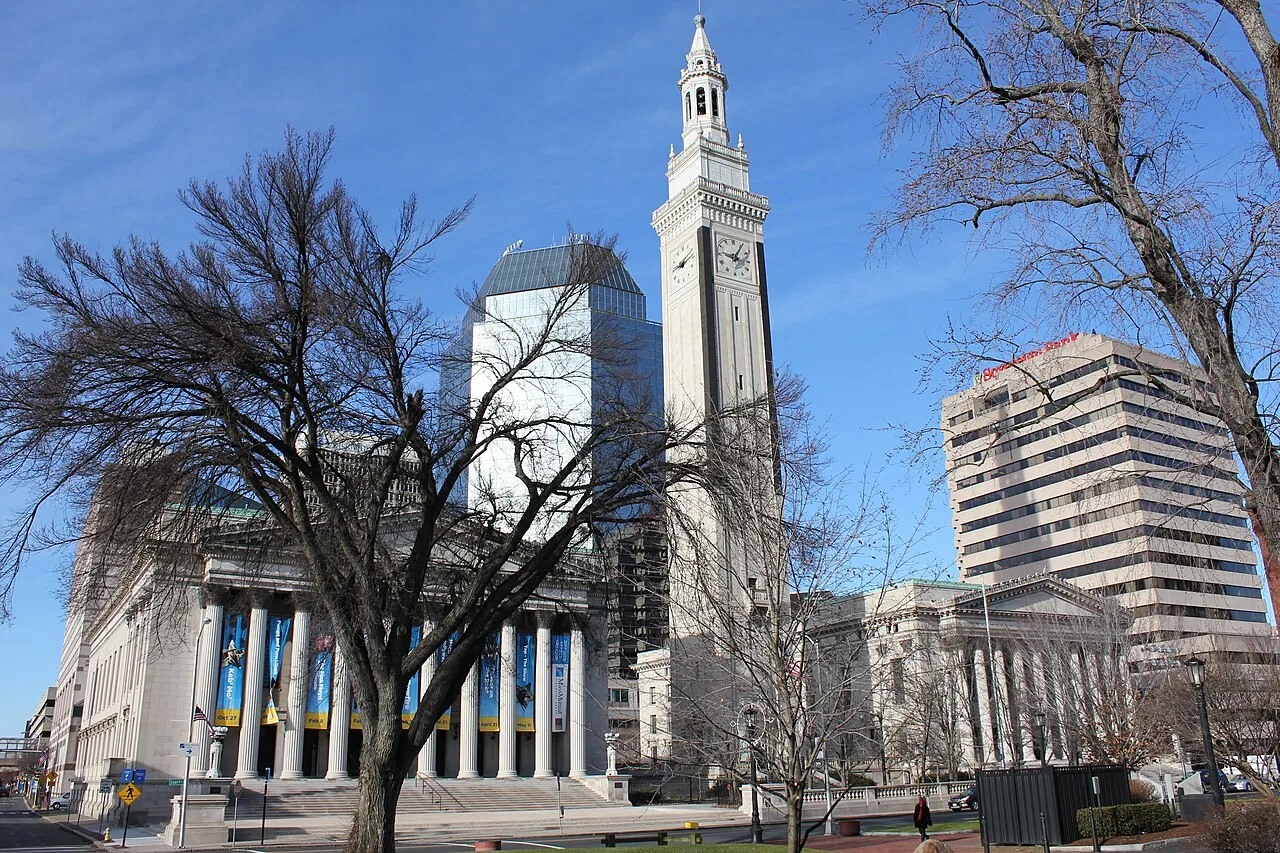
A building owner with many roofs and one budget needs a ranked list more than a single estimate. Bay lies about two miles east of Metro Center and contains 556.5 acres, excluding streets and railroads, bounded by the Boston and Albany rail line, Roosevelt Avenue, State Street and the former Highland Division rail line with part of St. James Avenue; the City's profile identifies Margaret C. Ells Elementary, Central High School and part of American International College within it. Owners of school, college and commercial buildings often carry several roofs at once, and roofs in a portfolio are best handled by condition, risk and schedule. We inspect, repair, recover and replace low-slope and metal roofs in Springfield, MA, and for owners with several roofs we start by ranking them.
Rank the roofs before spending
The first pass is a condition survey of every roof: system type, approximate age, drainage, repair history and visible defects. Each roof receives a rating and a rough remaining life, and the survey sorts them into three groups: fix now, plan within a few years and monitor. That sort keeps a budget from going to a roof that can wait while another leaks.
Condition ratings rest on evidence. Photographs, moisture readings and notes on drains, seams and flashing back each rating, so a facilities director can explain the ranking to a board or a lender. Owners who want a multi-year plan receive a roof capital plan that sets each replacement in the year it is likely to be needed and notes which repairs bridge the gap.
Drone imagery and infrared scans speed the survey on large roofs. A drone roof inspection covers hard-to-reach areas without foot traffic, and an infrared pass at the right time of day shows temperature differences that mark wet insulation. We confirm suspect spots on the roof with a meter or a core sample, so the rating is based on contact evidence and not on imagery alone.
The survey also records warranty status. A roof under manufacturer warranty may restrict who can repair it, and a repair done outside those terms can affect coverage. We collect the paperwork at the start and write the repair scope to respect it.
Academic calendars and weather windows
Education buildings run on a calendar, and the roofing season is shorter than the break. A replacement that must be finished before classes resume has to be permitted, ordered and staged in the spring. Weather adds uncertainty, since adhesives, sealants and many membranes need dry surfaces and suitable temperatures. We count backward from the date the building must be ready, add a margin for rain days and tell the owner which sections can be done in a single phase.
For colleges, college and university roofing adds residential buildings, labs and public spaces with different tolerances for noise, dust and access. We plan each building separately, share the schedule with the facilities office and coordinate with other contractors on site.
Snow, ice and large flat roofs
Massachusetts rates severe winter storms as a high-likelihood hazard in its 2023 ResilientMass analysis, and the state plan counts damage to roofs and structures from snow and ice weight among the infrastructure impacts. A large flat roof gathers a lot of snow, and a few blocked drains can hold a lot of meltwater. We count drains against roof area, check for overflow provisions and look for ponding marks that show where water stood after the last thaw.
Where drainage is thin, added drains, overflow scuppers or tapered insulation correct it. The best time for those fixes is during a replacement or recover, when the roof is open and slope can be built.
Phasing work around classes and residents
On an active campus or school site, the work zone shapes everything. We agree on the access route, the staging area, deliveries and the hours of noisy work with the facilities office before the first day. Fencing separates the zone from walkways, and signs warn of lifts and overhead work. Fresh-air intakes near the work are covered during dusty phases, and the area below is checked for debris at each closeout.
Roof sections are closed daily, with temporary tie-ins if the permanent detail has to wait for weather. Photographs show each tie-in, so the next shift knows where the work stopped. The facilities office receives a short written update each day, and any change to the schedule is explained with the reason and the new plan.
Perimeter checks for wind
The National Weather Service documented an EF3 tornado crossing Springfield on June 1, 2011, damaging large commercial brick buildings and removing roofs from some of them. On any large commercial roof, perimeter securement is the first line of defense. We examine coping, edge metal, membrane terminations and parapet caps, and we note any loose or corroded fasteners. A short list of perimeter repairs, done in fall, is often the cheapest protection a roof can receive.
Equipment attachment gets the same review. Rooftop units, exhaust fans and vent stacks should be fastened to curbs, and curbs should be fastened to the deck. A unit that shifts in high wind opens flashing around it and can damage the membrane. These items are inexpensive to correct, and they are cheaper on a planned visit than after a storm.
Repair, recover or replace
A repair suits a roof with located defects and dry insulation. A recover suits a dry roof that can carry another layer. A replacement suits a roof with wet insulation or aged seams. The Building Division reviews replacement scopes under the 780 CMR 10th Edition, and commercial insulation levels follow IECC 2021 with state amendments.
Cost follows area, tear-off, insulation, penetrations, access and disposal, and for institutional buildings it also follows schedule constraints. We write each option with scope and what it leaves open.
For institutional owners, a phased replacement across several summers often fits the budget better than a single large project. The first phase covers the roofs in worst condition, and later phases follow the capital plan. Each phase gets its own scope, permit review and closeout, which keeps the work manageable and the records clean.
Turnover records and nearby districts
The closeout record lists the roof sections, product data, warranty terms, moisture findings and a sketch of drains and penetrations. A facility team keeps it with the capital plan and updates it at each inspection. Owners with buildings in McKnight or Upper Hill can use the same format, and a maintenance visit each fall keeps drains clear.
Commercial Roofing Questions
How do you rate the condition of a roof?
We look at system type, age, drainage, seams, flashing and moisture findings, then assign a rating and a rough remaining life. Photographs support each rating.
What is a capital plan for roofs?
A multi-year schedule that places each replacement in its likely year and lists the repairs that bridge the gap. It lets a budget cover the roofs in order of need.
Can summer work be finished before the term starts?
It can if the permit, materials and staging are in place in spring. We schedule backward from the opening date with a margin for weather.
How do you handle labs and residence halls differently?
Labs need protection for equipment and vibration planning. Residence halls need noise windows and clear access routes. Each building gets its own plan.
What if one drain fails on a large roof?
Water ponds around it and loads the deck. Overflow scuppers provide a backup route, and we check that they exist and sit at the right height.