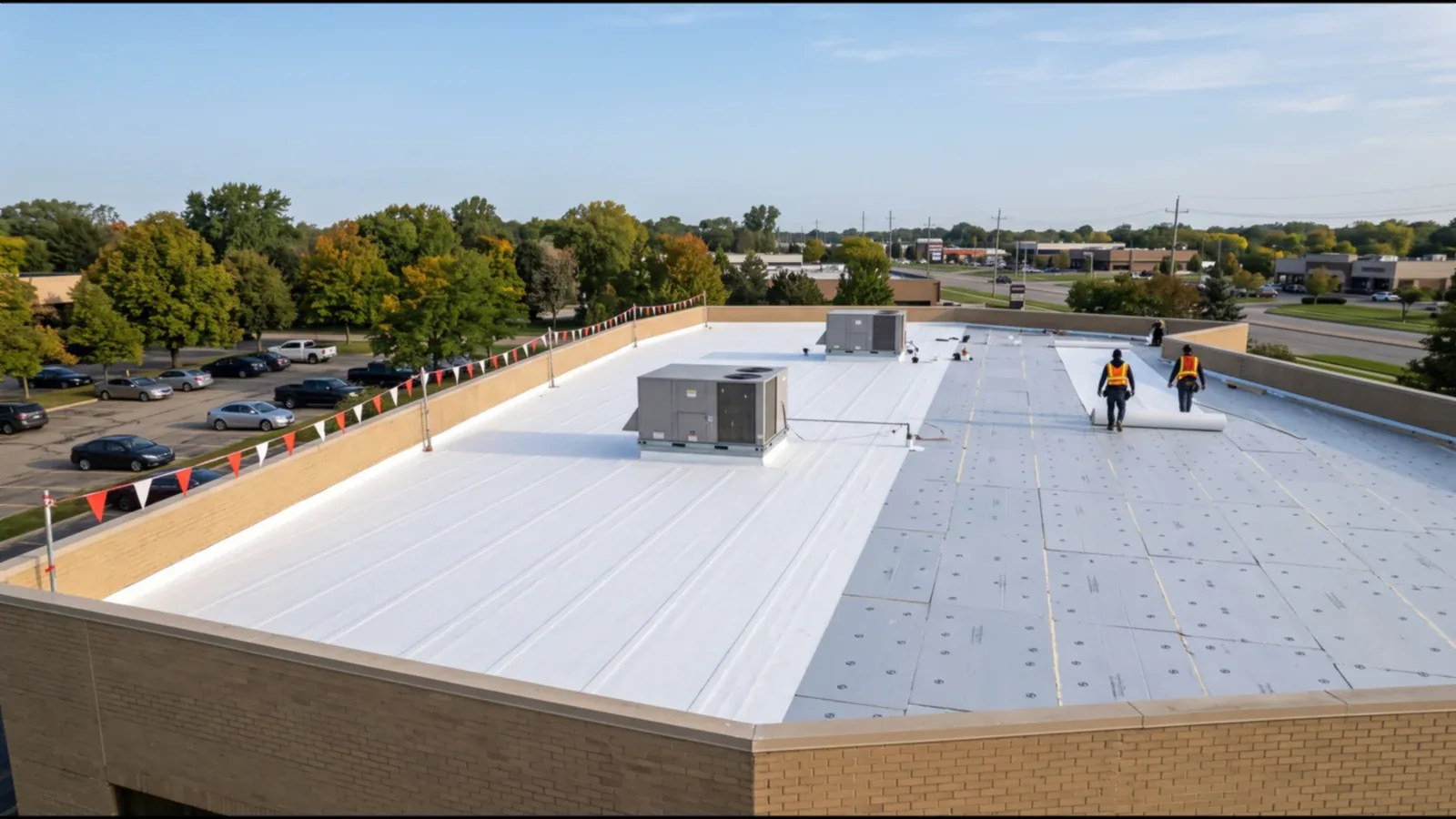
The foam on a spray polyurethane roof is not what fails first; the thin coating over it is. On Springfield, MA buildings with odd roof shapes, many penetrations or tight access, SPF is attractive because it is sprayed in place as a continuous insulating layer with no seams, then protected by an elastomeric coating. When that coating erodes, cracks or is punctured, water and ultraviolet light reach the foam, and the damage spreads from a small spot. We start by checking coating condition, foam thickness and moisture, because the cheapest fix is a recoat at the right time, and the most expensive is the one that waits until the foam is wet. The general contractor or facility lead gets the findings on a marked plan, with each cored location, each defect and each recoat area numbered, so scheduling decisions rest on measured conditions.
Read the coating before the foam
The protective coating is the roof's skin. We look for erosion that exposes foam, hairline cracks, blisters, pinholes, bird damage and wear where crews walk. Foam that is exposed turns from firm to chalky and then to crumbs, so we press the surface and feel for softness.
Thin spots and foot-traffic paths deserve a close look. A walk pad installed at the right location prevents damage that a coating cannot take. We photograph each defect and mark it on the plan, then separate recoating areas from areas needing foam repair. A recoat on a sound roof is a maintenance item. A recoat over damaged foam hides the problem and wastes money.
Penetrations are the most common failure location on foam roofs. Pipes, vents, curbs and drains each need a coating thick enough to bridge the junction and cover the foam edge, and the coating thins at corners where spray angles are awkward. We press and probe each penetration, look for hairline separation between foam and the penetrating object and check that the termination at walls is sealed. A small gap at a curb allows water to travel between foam and substrate, and the leak that results appears far from the cause.
Check thickness and moisture in the foam
We take small core samples to measure foam thickness and check whether the foam is dry. Closed-cell foam resists water but is not waterproof once the coating is breached, and wet foam loses insulating value and adhesion. Infrared surveys can locate suspect areas without cutting, and cores confirm what the survey suggests. An infrared moisture survey draws the repair boundary on a roof that otherwise looks uniform.
Core results also tell us how many times the roof has been recoated and whether a prior contractor applied foam over an old roof. We record each layer so the owner understands what is on the building. If cores reveal wet foam in several spots, the scope moves from recoat to removal and replacement in those areas.
We close every core the same day with foam or a sealed plug and coating, and we record its location so a later inspector does not mistake it for a defect. Thickness readings across the roof also show where the original application varied. Thin zones age faster and may need an additional build coat at the next recoat, which we price separately so the owner can see the cost of correcting an uneven original job.
Plan around freeze, snow and wind
Massachusetts expects severe winter storms and counts roof damage from snow and ice among their effects. For a foam roof, the consequence is mechanical: shovels, ice tools and sliding ice can cut the coating. We advise on snow removal methods and mark where drifts form against walls and equipment.
Application timing is limited. Foam needs a dry, warm, low-wind day, and a coating needs a cure window. In Springfield that narrows the working season, so we plan recoats and repairs for suitable weather and use temporary protection when winter arrives. Surface temperature, humidity and the dew point all matter for adhesion and cure, and a coat applied in marginal conditions can fail within a year. Wind during spraying causes overspray, which can reach cars and windows, so we control it with barriers and by choosing the right hour. Edge detail matters on foam as on any system, especially in a city that saw an EF3 tornado remove roofs from some commercial brick buildings in 2011.
Choose recoat, repair or replacement
If the foam is dry and thick enough, a recoat with an elastomeric system can restore the roof. We often compare silicone roof coatings and acrylic roof coatings on foam, since each has different ponding tolerance, dirt pickup and cost. If small areas are damaged, we cut out and re-spray foam, then coat. If wet foam is widespread, we remove it and install a new assembly. Because spray foam is part of the insulation, the energy code applies when the assembly changes, and the city reviews the permit set, so we include the code path in the scope.
A foam roof can also be a good base for a roof coating restoration program with a planned recoat interval, set by inspection and not by the calendar. For small punctures and cuts, membrane puncture repair follows the same sequence: dry, clean, repair foam if needed, prime and coat.
Detail the edges and keep a record
Foam roofs fail at edges, drains and penetrations when the coating is too thin or the foam pulls away. We check parapet caps, flashings and drain bowls and make sure the foam is terminated properly with a protective layer. On downtown storefront buildings, such as those the city's Northeast Downtown plan discusses along the Chestnut Street corridor, parapets and wall terminations deserve extra attention.
The closeout record lists foam thickness, coating type and thickness, cure dates, areas repaired and photographs. It also names the recoat trigger, such as visible erosion or a set inspection date. That record helps owners compare the roof's condition with the plan and budget for the next coat. When a building changes hands, the record also tells the buyer what the roof is, how thick the foam is and what maintenance it needs, instead of leaving them to find out by their first leak.
Commercial Roofing Questions
How often does a foam roof need recoating?
It depends on the coating, exposure and traffic. We inspect for erosion, cracks and thin spots and recommend a recoat when the coating shows wear, not on a fixed calendar.
Can I walk on a spray foam roof?
Light traffic is fine with walk pads in service paths, and the pads are cheaper than coating repairs after a season of boots on bare coating. Heavy or repeated traffic, such as service crews visiting rooftop units every week, calls for a marked route and a replaced pad when it wears through. Unprotected traffic and ice tools can damage the coating. We mark paths and recommend pads.
What happens if the foam gets wet?
Wet foam loses insulating value and may need to be removed. We use cores and infrared surveys to find it and set the repair boundary.
Is foam a good choice for an irregular roof?
Often yes, because it conforms to shapes and penetrations without seams. It still needs a dry substrate, correct thickness and a good coating.
Can foam be installed over an old roof?
Sometimes, over a dry, sound surface that is compatible and clean. We test and may recommend removal if the old roof is wet or unstable.