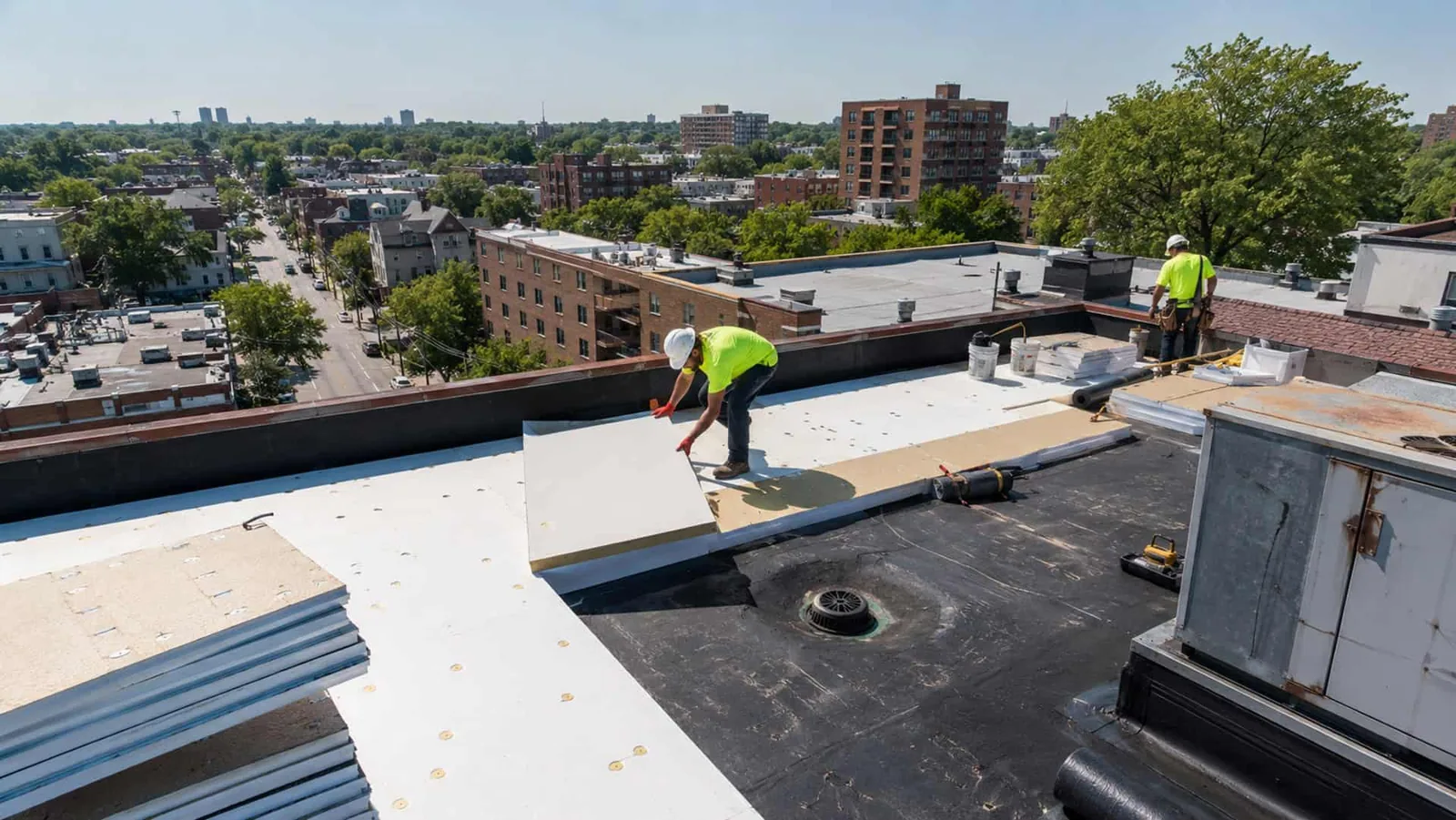
A coating only helps when the roof beneath it can hold the system and move water to its outlets. In Springfield, snow and freeze exposure make that first check important: trapped moisture or weak seams remain problems under a new surface. We inspect adhesion, substrate, flashings, and drain paths before comparing restoration with replacement. Buildings in the Indian Orchard Business Park and along Roosevelt Avenue have different operating and access needs, so the proposed work area and staging plan are scoped to the property.
Confirm the roof can be coated
We check the existing membrane or metal surface for adhesion, brittleness, open seams, failed flashing, corrosion, and prior coatings that may not be compatible. Suspect areas may need test cuts to confirm whether insulation is dry and the deck is suitable. We map those findings by section instead of treating the whole roof as one condition. If wet insulation, widespread delamination, or unstable substrate is present, coating alone does not correct it. The scope should identify replacement or localized reconstruction before a coating system is considered.
Springfield’s Smith & Wesson industrial site planning material describes an 85-acre site with potential industrial, commercial, or office buildout. Industrial buildout of that kind brings equipment penetrations and long drainage paths, and both need confirmation in the field before any surface work. We record what system is present and identify the test or repair needed at each transition. A commercial roof inspection can establish that baseline, while a moisture survey may help select test locations where conditions warrant it.
Correct water paths first
A coating follows the roof profile, including low areas and irregular transitions. Before application, we evaluate drains, scuppers, crickets, counterflashings, curbs, and edges. Standing water that persists after nearby surfaces dry may point to compressed insulation, a deck deflection, or a blocked outlet. We determine whether cleaning, a tapered correction, or a repair is needed before coating. A new surface should not bridge an open seam or conceal a drain restriction.
The state’s resilience plan counts snow and ice weight on roofs among the harms of a severe winter. In Springfield, a coating scope therefore has to account for drainage and transitions that carry meltwater. We clean and repair those details with materials compatible with the planned system. Where outlets need construction work, drain and scupper corrections should be included before field coating. This order prevents a surface treatment from being used to mask a water-management problem.
Match preparation to material
Preparation depends on whether the existing roof is a membrane or metal system and on the condition of its surface. We remove loose material, clean contaminants, repair seams and fasteners, and apply the primer required by the selected coating. A representative test area can confirm adhesion before production begins. At a metal roof, we address fasteners, panel laps, and corrosion; at a membrane roof, seam condition and compatibility control the detail work. The work plan lists preparation and cure conditions so each area has a defined release point.
Massachusetts uses the 780 CMR 10th Edition, and Springfield’s Building Division reviews plans and inspects applicable alterations and repairs. If the proposed restoration involves assembly changes, the owner can identify required permit review before scheduling. We separate coating application from repairs, tapered drainage work, and replacement of damaged substrate. A silicone roof coating or acrylic coating is selected for the actual substrate and exposure, not simply because one product is familiar.
We also state how the roof is prepared and where application stops at each detail. The coating must not bridge a moving joint or conceal an outlet, and flashings need compatible terminations. If a repair requires another trade, the work sequence records when that correction is complete and when the surface is ready for coating. This prevents the finish pass from hiding unfinished work.
Plan the application window
Weather controls when a coating can be installed. Surface moisture, temperature, dew, forecast rain, and cure time all affect the application sequence. We divide the roof into workable areas, protect openings, and keep drains clear while material is placed. Equipment and access routes are coordinated with the facility contact. If a building remains occupied, we plan around rooftop intakes, deliveries, and the rooms under the active work zone.
The City describes State Street as a mixed corridor of business, residential, park, cultural, institutional, and historic uses. On a Springfield property with similar operating constraints, public entrances and tenant hours can influence staging even when the roof work is above grade. We confirm the route and set daily closeout steps for open containers, tools, and temporary protection. The schedule can pause when conditions leave the surface wet or outside product limits; a recorded weather window is safer than extending work into uncertain cure conditions.
Compare restoration with renewal
Restoration is most useful when the existing assembly is stable, dry enough for the selected system, and repairable at its details. Replacement may be more appropriate when the deck or insulation needs broad work, attachment is unreliable, or failures recur across sections. We show the roof areas that support each option and identify the unknowns that require testing. Cost drivers include preparation, repair quantity, access, drainage correction, substrate condition, and the amount of coating needed for the selected specification.
The National Weather Service documented a 2011 EF3 tornado path through Springfield that damaged commercial brick structures, including buildings where roofs were removed. That history is why perimeter attachment gets examined after a severe wind event, and we record the edge and flashing findings. When deterioration is broader than a coating can address, a replacement assessment can compare the necessary assembly work with a recover option where conditions permit. The report states which condition drove the recommendation.
Record the finished system
After application, we document the repaired areas, coating type, limits, and any details excluded from the scope. Photographs show edges, penetrations, drains, and representative field areas. We note cure or access restrictions that remain and identify the next inspection trigger. This gives the owner a record of what changed and a reference for future mechanical work. A roof asset file can connect this information with other sections and planned capital work.
For properties with separate roofs or additions, the closeout keeps boundaries distinct rather than implying every area received the same treatment. Capital planning can use the findings to sequence work against operating priorities. We also identify maintenance items that remain after coating, such as outlet cleaning or monitoring an unrelated membrane section. Send available roof drawings, leak history, access requirements, prior coating records, and the decision date. We will inspect the assembly and explain whether restoration is supported by field conditions.
Commercial Roofing Questions
Can a coating cover wet insulation?
No. We investigate moisture and identify wet material for removal or other corrective work before coating. The extent must be known well enough to define a stable substrate.
Does a coating correct ponding?
It follows the existing profile. We check whether cleaning, a drain correction, or tapered work is needed before application, and include that work separately in the scope.
How is coating adhesion checked?
We inspect the surface, confirm compatibility, and can test a representative area. The result guides preparation and whether the selected coating can remain under consideration.
What can delay the application?
Wet surfaces, temperature, dew, wind, forecast rain, and cure requirements affect the schedule. We divide work into areas that can be protected and closed each day.
When is replacement the better comparison?
Widespread wet insulation, unstable attachment, repeated failures, or deck concerns may call for broader assembly work. We identify the evidence and tests behind that comparison.