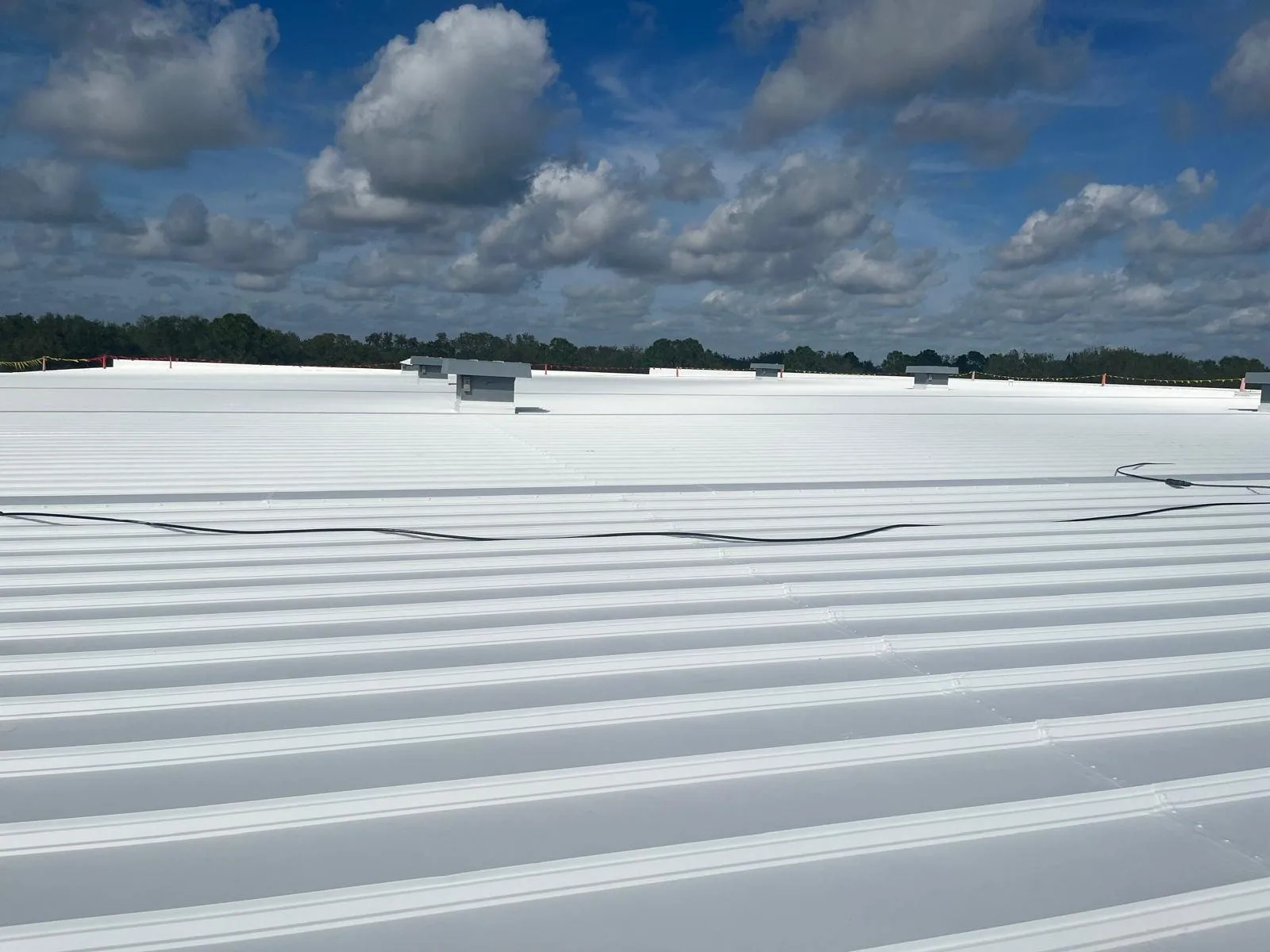
A puddle that sits on an acrylic-coated roof for two days after rain is the first thing we look at, because acrylic coatings are water-based and do not do well under standing water. On Springfield, MA roofs with good drainage, acrylic is a cost-effective way to renew a sound metal, built-up, modified bitumen or foam surface, add reflectivity and extend the time before replacement. On roofs that pond, it can blister, soften or wash out. The fit depends on drainage, substrate and weather, so we check those three before anyone orders product. Then we write a scope that lists the base repairs along with the coating, so the price reflects the work needed for the coating to last. The first deliverable for an owner or a general contractor is a marked roof plan that counts seams, fasteners, penetrations and wet areas, with photographs of each.
Check drainage before choosing acrylic
We walk the roof after rain or after a controlled water test and note where water remains. Shallow, short-lived dampness at a low spot is different from a puddle that persists. We trace each drain, check that strainers are clear and look at the slope to each outlet. If the roof ponds, a tapered insulation overlay, a new drain or a different coating type may be a better answer.
This is where acrylic and silicone differ. A silicone roof coating tolerates standing water better, so for ponding roofs we often present both options with the drainage work they require. Acrylic usually costs less, cleans easily and takes a fresh coat well, so it suits roofs with good slope and a plan for regular recoating. If the building owner expects the roof to be replaced within several years, acrylic can bridge that gap at lower cost; if the roof must last longer, the better answer may be a thicker system or a replacement.
Foam roofs fall under the same drainage test. A spray foam roof with an acrylic topcoat does best when water leaves the surface within a day, and we measure how long it takes before recommending a topcoat. Roofs with a long drainage lag may need silicone, a slope correction or a different plan.
Prepare the surface and repair the base
An acrylic coat bonds to a clean, dry and sound surface. We pressure wash or scrub the roof, remove loose material and treat rust or mildew. Cracks, open laps and failed flashings are repaired, and fasteners are tightened or replaced. Seams are sealed with compatible materials and reinforced where movement is expected. A bond test on a small area confirms adhesion before the whole roof is committed.
Metal roofs need extra care. Rust is wire-brushed or treated, exposed fasteners are tightened or replaced, and seams are caulked and reinforced with fabric where movement is expected. Without that, acrylic bridges the gap for a season and then cracks along the seam. We list each metal repair by count and location so the owner can compare the proposal with the roof, and we photograph the fabric-reinforced areas before the topcoat covers them.
We count and photograph the repairs so the owner sees what went into the roof before the coating covers it. Wet insulation is not coated. An infrared moisture survey maps it, and cores confirm, then the wet material is removed and replaced. Coating over moisture traps it and leads to blisters, and it can also leave the roof looking better while the insulation continues to degrade below.
Plan the cure window around New England weather
Acrylic cures by evaporation, so it needs a dry surface, moderate temperature and several rain-free hours after application. Cold, damp or windy days lengthen the cure and can wash out the film. In Springfield that narrows the season, and we plan coating work for settled weather and hold off when a front is forecast. We note the temperature, humidity and dew point at each application and record them.
The state's hazard analysis rates severe winter storms a high-likelihood hazard, and roof damage from snow and ice is among the impacts it lists. An acrylic film applied late in the season may not cure before freeze, so we prefer to finish before cold weather and to leave winter for inspection and repair. Where roof work must continue into cold months, we use temporary protection and defer the final coat. We also watch for evening dew, which can wet a fresh film overnight, and we choose start times and coat thickness to give the film its best chance.
Weigh reflectivity and code requirements
White acrylic coatings reflect sunlight and lower roof surface temperature in summer, which can reduce cooling load on a building. Our cool roof installation work looks at whether reflectivity is worth the cost for a given building, since winter heating still matters in Springfield. A coating alone does not satisfy insulation requirements if a roof assembly is altered, and Massachusetts sets those requirements in Chapter 13 of its building code.
The city's Building Division reviews plans for alterations and repairs, so we confirm when a coating job needs a permit and what documents the reviewer wants. The proposal states the coating thickness, the product data and the base repairs, and it names the warranty terms if any. If the owner plans to add rooftop solar or new equipment later, we note where curbs and supports will land, because penetrating a fresh coating without a proper detail wastes the work.
Coordinate access and keep the record
Along streets like State Street, a 3.2-mile corridor of businesses, institutions and historic assets, staging and overspray control are part of the plan. In East Springfield, a 1,504-acre area in the city's northern tier that includes neighborhood streets and school sites, we shield cars, windows and walkways from overspray and tell nearby occupants when the work starts.
The turnover record lists the substrate, repairs, primer and coating type, coats applied, thickness measured, cure conditions, photographs and the recoat trigger. A coating is not a one-time event. We recommend an inspection each spring and after any major storm, with a recoat when wear appears. The record lets a future owner see the age of the coating, the number of coats and the cleaning method that is safe, so maintenance crews do not strip the film with the wrong chemical.
Commercial Roofing Questions
Can acrylic coating go on a roof that ponds?
Usually not. Acrylic is water-based and can soften or wash out under standing water. Correct drainage first or consider silicone.
How many coats does a roof need?
Typically two or more, to reach the thickness the product requires. We measure wet-film thickness during application and dry thickness after, and we note any area that needs a third coat, such as around penetrations and at seams.
What is the best time of year to apply?
A stretch of dry, mild weather with no rain forecast for the cure period. In New England that usually means late spring through early fall.
Does acrylic make a roof last longer?
On a sound roof it can add useful years by protecting the surface and reflecting heat, and the amount depends on drainage, traffic and how well the surface was prepared. It does not repair wet insulation, open seams or structural problems.
Can a recoat be done later?
Yes. Acrylic takes a new coat well after cleaning. We inspect and recommend a recoat when wear shows, rather than on a fixed schedule.