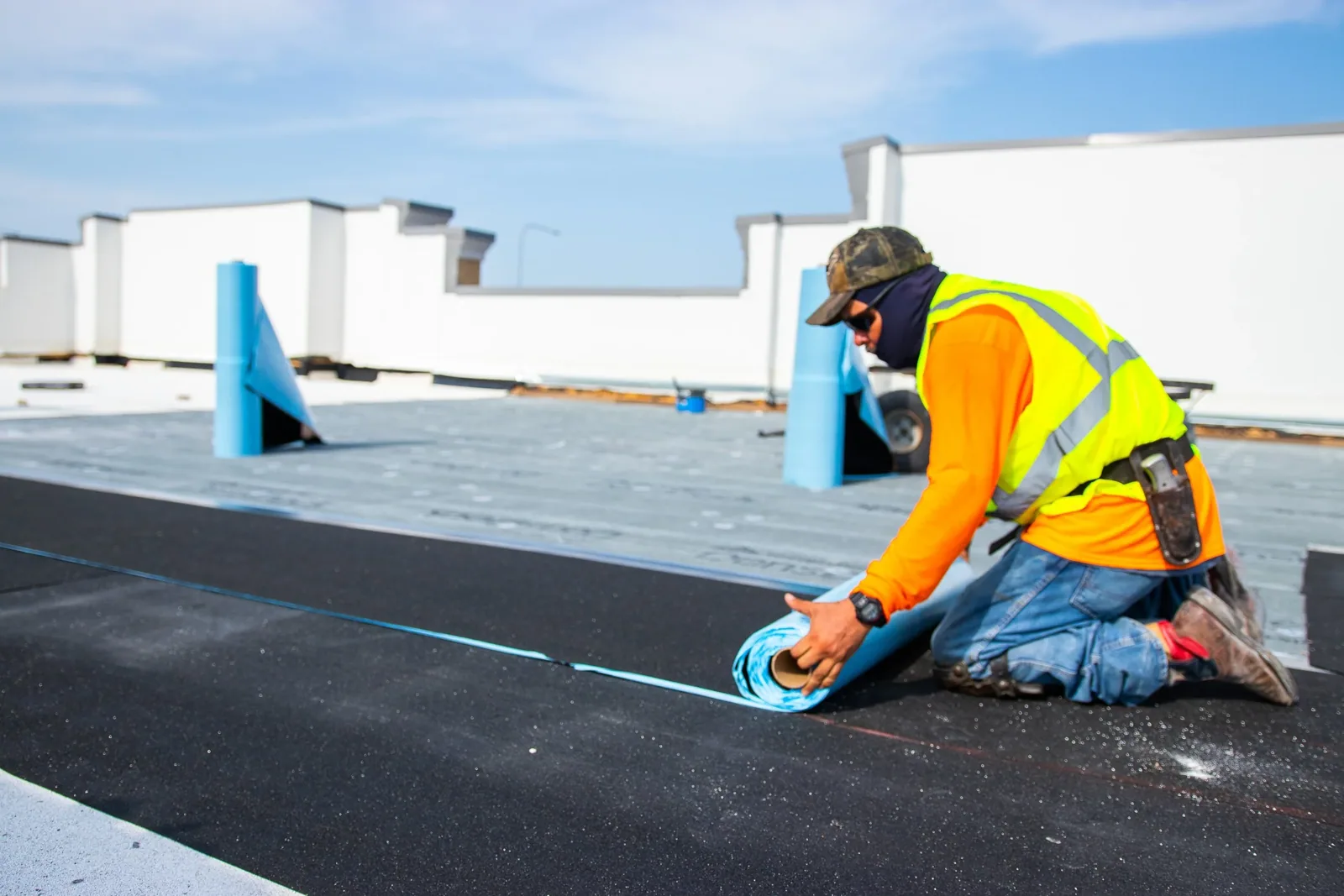
Wind finds the edge of a single-ply roof first, so we start there on a Versico roof in Springfield, MA. A loose metal edge, a lifted termination bar or a split in the perimeter sheet can open the whole field to uplift in one gust. The maker supplies thermoplastic and rubber single-ply systems, including welded TPO sold as VersiWeld, and the edge details are where those systems are most likely to be disturbed by weather, ladders and prior repairs. After the edge, we work inward to the seams, the penetrations and the drains, in that order, and we write each finding on the roof plan.
That order keeps the work in sequence. A repair at the field of the sheet does little when the perimeter is moving, and a perimeter repair does little when the drains hold water against the seams. Each step has to hold before the next one is worth doing.
Start at the perimeter
We walk the full edge with the roof plan in hand. Fasteners in edge metal and coping should be tight and sealed, joints between metal sections should be covered, and the membrane should reach the edge without tension. Where the sheet has pulled back from a wall, or where a gutter sits low, water finds the gap. We mark each loose section, photograph it and tighten or replace it before anything else is done on the roof. A secure edge protects the field because uplift loads concentrate at the perimeter and the corners.
Termination bars and sealant lines on walls get the same attention. A bar that has pulled away leaves a gap where wind-driven rain enters behind the sheet, and a dried sealant bead no longer sheds water. We reseal, refasten or replace as needed, and we note which walls are masonry, since a bar fastened to old mortar can work loose again.
What the 2011 tornado taught about edges
On June 1, 2011 an EF3 tornado moved through Springfield, and the Weather Service survey recorded lost roofs on some large commercial brick buildings. A tornado is not typical weather, but the damage pattern is a useful reminder that perimeter attachment and parapet condition deserve respect on every building. After any strong wind, we recommend a walk of the edges, flashings and rooftop equipment before the next storm arrives. A wind-damaged roof often shows lifted corners and displaced coping before it shows a leak.
Rooftop equipment belongs in that check. Units that were not strapped or curbs that were not fastened can shift in wind, tearing the sheet beneath. We look for slid units, bent supports and sheet damage under equipment feet, and we list each item with the repair that goes with it.
Thickness, seams and age
Sheet thickness varies by system and by when the roof was installed. A thicker sheet gives more material to weld and more margin against wear, and it is a factor in whether a recover is reasonable. We measure thickness at a test cut, probe the seams, and check whether the surface still accepts a weld. On a TPO roof the welds must show a continuous bead, and on an aged surface a cleaner and a trial weld come first. If a trial weld does not bond, we mark the area for section replacement, not patching.
Fastener condition is the next question. On a mechanically attached sheet, backed-out fasteners push up under the membrane and wear a hole from below, and plates that have lost their grip let the sheet flutter. We tap down or replace fasteners where needed and record the pattern found, since the spacing tells us how the roof was designed to resist uplift.
Industrial corridors and wide roofs
Industrial buildings in the Wason/North Industrial Park, listed by the Springfield Redevelopment Authority as an urban renewal plan area amended in 2003, and along the Roosevelt Avenue corridor get a drain-path walk before any work is priced. The city's Smith & Wesson industrial site fronts Roosevelt Avenue and is visible from I-291, and the same walk applies to roofs in that part of town. We check each drain, mark ponding and look at the way equipment is supported. Where roof access is by lift, we confirm the route and the ground conditions first.
Industrial roofs often sit over tenants who cannot stop operations. We split the roof into sections, close each before the crew leaves, and agree with the tenant on forklift routes and dock hours so material staging does not block work. Dust and debris plans protect inventory below.
Recover limits
A recover can add years when the old roof is dry, fastened and regular. It is the wrong choice when wet insulation is present in several areas, when the deck is soft or when a second layer would exceed what the code allows. The 780 CMR 10th Edition governs, and the Building Division in Springfield reviews roof alteration plans, so we confirm the layer count and the insulation requirement with the permit office before pricing the work.
When a recover is workable, the old roof gets a cover board and the new sheet is attached to meet the wind rating the permit requires. When it is not, tear-off follows, section by section. The choice is stated in writing with the reasons, so the owner can see why one route costs more than the other.
Keeping the next inspection useful
A regular maintenance visit clears drains, checks edges and walks the seams after the first heavy freeze. The record we leave names the system, the repair limits and the next trigger. If a neighboring section carries Soprema or GAF material, the junction is drawn on the plan so the next crew sees it.
Planning visits around the seasons helps: one before winter for drains and edges, one after thaw for seams and ponding, and one after any major wind event. Each visit adds a dated entry to the roof file, so patterns show up over time and not only after a leak.
Closeout photos are taken from the same positions each time, which makes change visible. A crack that was a hairline in the fall and a gap in the spring is a finding with a date on it.
Commercial Roofing Questions
Does a Versico roof need special edge metal?
It needs edge metal that suits the system and the wind load at the building. We check that the metal, the fasteners and the sealant are compatible with the installed sheet, and we replace sections that are bent or poorly attached.
How can I tell if my edge is loose?
Look for gaps, lifted metal and stains below the parapet. From the roof, a loose section moves under hand pressure. We test every run during the walk and mark the loose lengths with paint for repair.
Can a thin TPO sheet be recovered?
Sometimes. The sheet must be sound and dry, the insulation dry and the code must allow a second layer. We measure the sheet, take a core and test the seams before deciding, then state the result in writing.
What does a seam probe show?
It shows whether the weld edge is closed and bonded. A tool that slides under the edge marks a failed section, which we then clean and repair. Repeated failures in one area point to a section replacement.
How soon after a storm should the roof be checked?
As soon as access is safe. Edges, flashings and equipment curbs show storm effects first, and a quick walk can prevent a small opening from growing into interior damage during the next rain.