Water on the top-floor carpet of a hotel is a room out of inventory, and on a convention weekend that room is the one a guest has already paid for. Hospitality owners in Springfield, MA run buildings where the roof sits directly over rooms, meeting space, kitchens and mechanical plant, and any leak reaches revenue within hours. Metro Center holds the MassMutual Center and Symphony Hall among its cultural and institutional uses, and an event night puts pressure on room supply nearby. A roof plan for that kind of property has to know the event calendar before it knows the membrane.
Our first visit follows the water from the room back to the roof. We check the ceiling below, the penetration above it and the drain path between them, then tell the general manager which rooms can stay booked and which cannot.
The top floor is where a leak costs the most
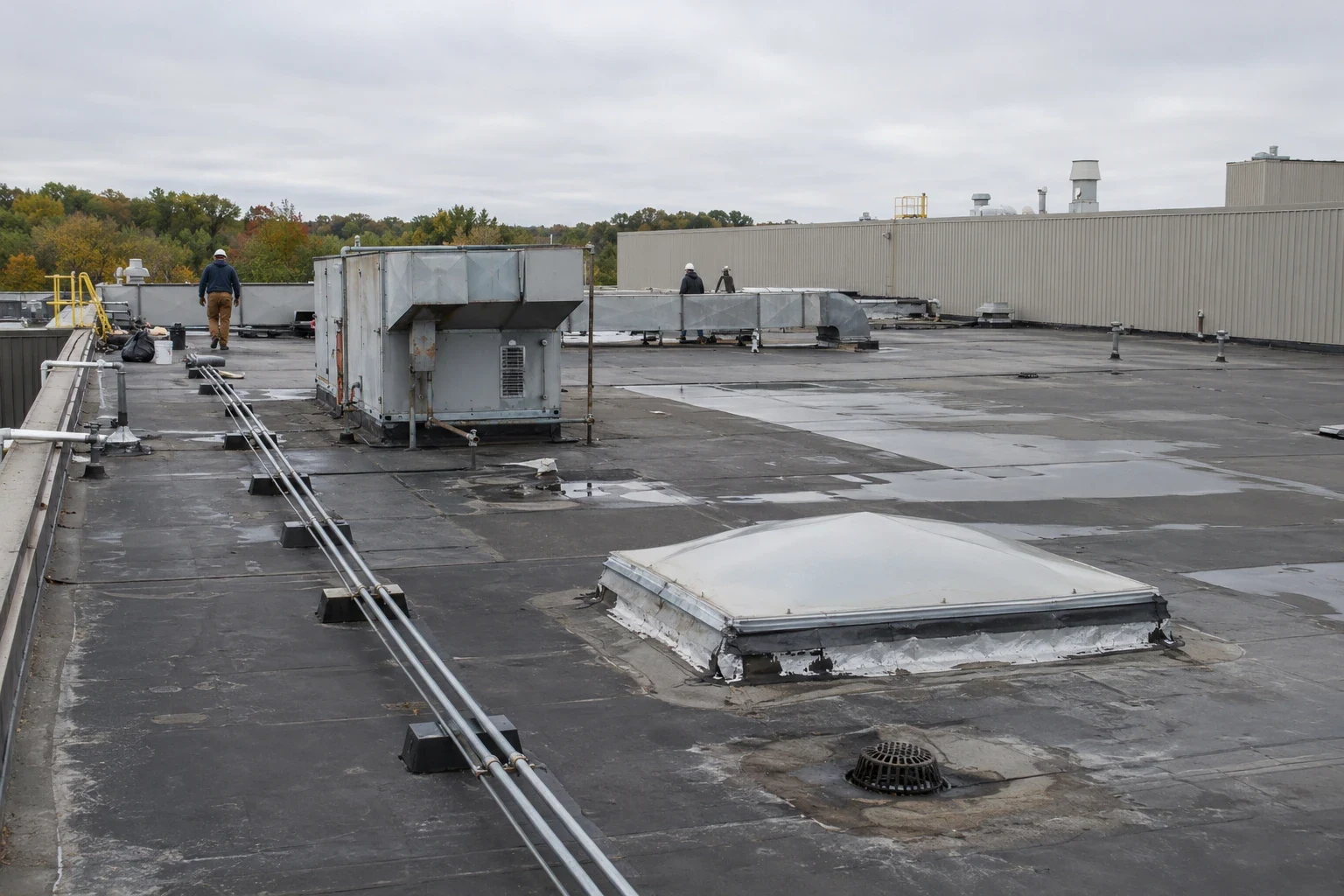
A hotel roof is rarely one clean field. Guest wings are often low-slope sections broken up by mechanical penthouses, stair towers, kitchen exhaust, pool dehumidification equipment and laundry vents. Each penetration is a place where flashing can open. Condensation also behaves differently over a pool hall or kitchen, where warm, moist air rises against the underside of the deck, and a roof that looks sound from above can hold wet insulation beneath.
We walk every section, photograph every curb and penetration, and note any ponding after rain. Moisture mapping with infrared thermography tells us where the insulation is saturated before a ceiling stain ever appears. The result is a ranked list: the sections feeding active leaks first, the sections at risk second, and the sections that only need maintenance third. A hotel group can match that list against its renovation schedule and its brand inspection calendar.
Guests hear everything, so sequence the noisy work
Roofing noise carries into rooms below, and a tear-off above occupied rooms will draw complaints within minutes. We plan noisy work for the hours with the fewest sleeping guests, choose methods that keep vibration and hammering low, and agree with the front desk on which wings to hold empty. Fastener driving, torch work and removing old membrane are the loudest steps and get the tightest windows.
Odors matter just as much. Hot asphalt, solvent adhesives and some coatings can pull into air intakes on the roof and reach corridors. We locate every intake before choosing a product and often seal or shut down the affected unit with building engineering while the work is open. The work zone also needs to stay away from patio decks, drop-off lanes and rooftop terraces. A crew's lift and dumpster should never block the entrance a delivery truck uses. Reroofing an occupied building means those controls are written into the schedule before the first panel comes off, including a named contact on the property for complaints during work hours.
Work around the event calendar, not around the weather alone
Downtown properties near the Metro Center venues feel demand in waves, and roof work scheduled into a peak weekend creates the worst version of the job. We ask for the event calendar early, mark the weeks with the lowest occupancy and compare them against the weather window for the chosen system. Where the two do not overlap, we split the job into smaller sections so no part of the roof is open for more than a few days.
Planning along the corridor works the same way. The Northeast Downtown plan studies the street grid between Liberty, State and Harrison Streets, with storefronts and the Union Station area tied together by Chestnut Street, and a hotel in that Northeast Downtown District has to deal with street staging, limited curb space and pedestrian routes. A crane pick may need a street permit and a flagger, and the date has to be fixed with the city well before the crew arrives.
Tie the roof decision to the renovation cycle
Hotels renovate on a rhythm set by brand standards, lender requirements and the age of the finishes. A roof that fails in the middle of that rhythm can undo a recent guest-room renovation. Replacement is easier to justify when it lands ahead of a room refresh, because the new ceilings will not have to be opened a second time.
Repair is the right call when the membrane is aging but the insulation is dry and the problem is concentrated at a few details. A capital plan that spreads replacement across several seasons helps a group that owns more than one property. Drainage is a common deciding factor: roof drains and scuppers that cannot carry a heavy rain or a snowmelt will force a repair into a replacement within a couple of seasons. The state's analysis rates severe winter storms as a high-likelihood hazard for Massachusetts, which is why we check the drain path and the edge before any hotel roof goes into winter.
Hand the engineering team a roof file they can use
Building engineers turn over, and the roof knowledge often leaves with them. At closeout we give the property a package: section drawings, photographs of the finished tie-ins, product data, warranty paperwork and a list of the penetrations with their flashing details. A new engineer can then trace a leak without starting from zero.
Owners with several properties can compare reports across the group. A hotel with its own restaurant uses the same format as a restaurant brand, and a hotel held inside a larger portfolio reports the way real estate investors expect, with dates, photographs and a cost range for each section. After the project, emergency roof repair is available around the clock, and the visit goes into the same file. We also keep a plan for the first major rain after the work, since that storm is the real acceptance test, and every hotel roof should be walked after it.
Commercial Roofing Questions
Can rooms stay booked during a reroof?
Some can. Rooms directly under the active section are usually blocked during tear-off, while rooms in other wings may stay open if the noise plan holds. We map the work area against the room list so the front desk knows each day which rooms to release.
What do you do about pool and kitchen moisture under the roof?
We check for wet insulation and trapped vapor above those spaces and discuss the vapor retarder and ventilation as part of the roof assembly. Pool halls and kitchens put more moisture into the deck than a guest-room wing does, so their roof sections get a separate assessment.
Who coordinates with the brand when the roof work affects an inspection?
The owner does, with our schedule and records in hand. We provide dated photographs, product data and a closeout summary the owner can forward, and we adjust the timing so a brand visit does not fall in the middle of an open roof.
How quickly can a leak over a guest room be stopped?
We respond at any hour, find the entry point and make the section watertight. A temporary repair is documented with its limits so the permanent scope can follow once the room is cleared and the weather allows.
Can a rooftop terrace or amenity deck share the roof?
It can, but the paver or deck system sits on top of the waterproofing and must be lifted for any repair beneath it. We note those areas in the inspection, plan the waterproofing detail at doors and edges, and tell the owner how much amenity space will be closed during a repair.