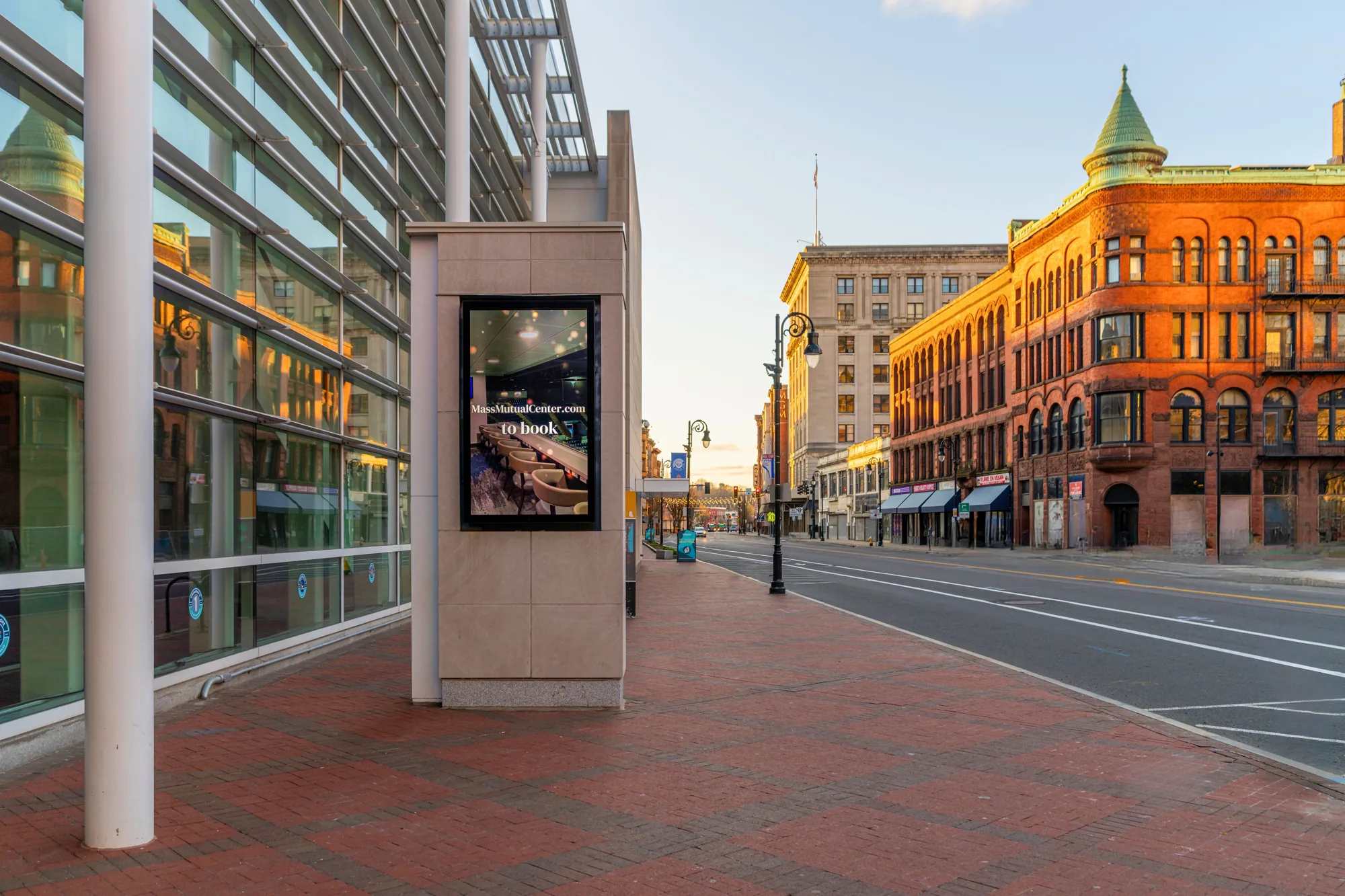
Where a neighborhood mixes housing with business and industrial zoning, roof work has to respect the neighbors as well as the tenants. Brightwood sits in the northwest corner of Springfield, covers 234 acres and is bounded by the Connecticut River, the Chicopee city line, the B&M Railroad and Clinton Street; the City's profile describes more than half of it as residential zoning, with the rest business or industrial, plus a river walkway and bikeway and two elementary schools. Our roof work in Springfield, MA covers commercial and light-industrial buildings with low-slope and metal roofs, and in a district like this the work zone, the delivery route and the noise window matter as much as the membrane.
Work zones next to homes and schools
When a commercial building shares a block with homes, the crew's habits become part of the job. Truck routes, early starts, hoist noise and debris all reach people who have no stake in the roof. We plan the access route and staging with the property manager, set work hours that respect the neighborhood, fence the work zone and keep the street clean at the end of each day.
Schools nearby add pick-up and drop-off patterns to the planning. We avoid deliveries and lifts at those times and keep pedestrian paths clear. These steps cost little, and they prevent the complaints that can slow a project. Where the City needs to approve a lane closure or a street permit, we start that request early so it does not set the start date.
Dust and noise are the other two items neighbors notice. Tear-off generates both, and the answer is sequence and containment: smaller sections, covered chutes for debris, sweepers at the end of each day and noisy tasks scheduled away from early-morning and evening hours. Neighbors who have a contact number for the site manager are far less likely to call the City.
Metal roofs and snow release
Where a light-industrial or commercial building has a metal roof, Springfield's winters test it in a particular way. Snow on a smooth metal panel slides when the surface warms, and a sudden release can damage gutters, equipment and anything below. We check that snow retention is present where the roof drops over walkways, entries and parking, and we look at its attachment, since a snow guard fastened to a failing seam is little help.
The other metal issues are fasteners and seams. Exposed fasteners back out as panels move with temperature, and washers dry out. Standing seam panels depend on clips and seam closure. A walk covers each: tightness, sealant, rust at cut edges and the condition of penetrations. Where a metal roof is worn but structurally sound, a coating or a metal roof retrofit can extend its life without full tear-off.
Winter weight and drain paths
Snow and ice weight is on the state's list of roof hazards: the 2023 ResilientMass plan rates severe winter storms a high-likelihood hazard in Massachusetts and names roof and structure damage among their impacts. On a low-slope roof, the first risk is a blocked drain under snow. When melt starts, water has no exit and backs against parapets and equipment. On a metal roof, ice dams at the eave force water under panels.
We check drains, scuppers, gutters and downspouts on every walk and record whether each is clear, partly blocked or damaged. For gutters on metal buildings, ice loading can pull a gutter off its brackets. We look at bracket spacing and fastener condition and recommend replacement of any that have loosened.
Gutters on commercial buildings carry more than rain. In a thaw they carry meltwater, ice chunks and the grit that collected on the roof over the winter. Undersized or sagging gutters pull away from the fascia, and downspouts that discharge onto a walkway freeze into a hazard. We check slope, bracket spacing and discharge points, and we recommend replacement where repair would be short-lived.
River edge and rail line conditions
The profile lists the Connecticut River and the B&M Railroad among Brightwood's boundaries. Both settings suggest checks worth making: roofs near open water and rail corridors can collect more grit and debris in drains, and wind coming off open ground meets the first buildings it finds with full force. We examine edge metal and the perimeter attachment of membrane for that reason.
In Springfield on June 1, 2011, an EF3 tornado that the National Weather Service surveyed took roofs off some large commercial brick buildings. That event is a reminder that perimeter attachment and parapet condition decide how a roof fares in extreme wind.
Sequencing the work on an occupied site
Most buildings keep operating through a roof project. We agree on the access route, staging area and work zone before the first day, and we confirm which equipment can be shut down, for how long and with what notice. Forklift paths, loading doors and customer entrances stay clear, and the roof is divided into sections so each is closed before the crew leaves.
The daily closeout covers debris, material security and photographs of the tie-in between new and existing roof. If a forecast changes overnight, the open area is reduced the next morning to what can be dried in. A general contractor or property manager receives a short written update each day, so other trades and tenants can plan around the roof schedule.
On metal roofs, the sequence follows panel direction, and safe access matters: slick panels in frost or dew need fall protection and appropriate footwear. We plan for it and brief the crew before the first lift.
Repair, recover or replace
Three paths cover most roofs here. When the surrounding roof is sound, a repair closes a located defect. When the existing roof is dry, a recover puts a new layer on top and spares the tear-off. When wet insulation or an aged system leaves no sound base, a replacement starts over from the deck.
Beside homes, price also carries fencing, traffic control and shorter work hours. A replacement goes through Building Division review under the 780 CMR 10th Edition, with insulation levels following IECC 2021 and its state amendments, so the scope shows them. Each option is written with what it covers, what it leaves open and the service life to expect.
Closeout and related districts
When the work ends, the owner gets a turnover record that holds photographs, product data, moisture readings, a drain and penetration sketch and a note on snow retention. Buildings in Liberty Heights or Memorial Square can be kept in the same record. A fall maintenance visit clears drains and tightens fasteners ahead of the first snow.
Commercial Roofing Questions
Why does snow slide off my metal roof?
Smooth panels shed snow when the surface warms. If the roof drops over an entry or walkway, snow retention should be in place and well fastened.
How do you reduce disruption to neighbors?
We set work hours, fence the zone, plan truck routes and keep the street clean. Lane closures and permits are requested early.
Can a worn metal roof be saved?
Sometimes. If panels and structure are sound, new fasteners, sealant and a coating can extend service. Heavy corrosion or open seams point toward retrofit or replacement.
What should I check after a snowstorm?
Look at gutters, drains, edge metal and any area below the eave where snow fell. Note ice buildup and send photographs.
Who approves roof work in Springfield?
Plan review and inspection of alterations and repairs fall to the Building Division, under the state code. We prepare the scope so it is complete.